In a world where soft skills increasingly define professional success, the way we train them needs a serious upgrade. Whether you’re a sales rep navigating objections, a manager delivering feedback, or a new hire learning to communicate with confidence—real-life conversation practice is essential.
At Yoodli, we believe the future of soft skills training is here and it’s powered by AIRoleplays.
The Problem: Traditional Roleplays Don’t Scale
Live coaching and roleplays have long been the gold standard for building communication skills. They’re also time-consuming, inconsistent, and hard to scale. Common issues include:
Schedulinglogistics
Uneven feedback
Low psychological safety
No measurement
As companies seek to uplevel communication across larger, more distributed teams, these gaps become critical bottlenecks.
The Solution: Yoodli’s AI Roleplays
Yoodli offer a smarter, scalable way to help individuals practice high-stakes conversations in a private, judgment-free environment. Built with coaching and enablement in mind, our roleplays simulate real-world scenarios, then deliver instant, personalized feedback powered by AI.
How It Works:
Pick a template: Choose from a growing library (e.g., interview prep, outbound discovery, difficult conversation, behavioral interview).
Practice with AI: Speak out loud as if you’re in a real conversation. Yoodli responds in real time, adapting to your answers.
Get feedback instantly: See data on your talk time, filler words, empathy, and clarity. Receive specific coaching tips aligned to your company’s frameworks.
Why This Matters for Enablement and L&D Leaders
Our AI Roleplays are built to address key challenges faced by GTM, enablement, and people teams:
Scalable
Consistent
Make learning easy
Consistent data collection
Whether you’re onboarding 50 reps or rolling out a new messaging framework, AI roleplays can support thousands of learners simultaneously while supporting their learning style and preferences.
Real-World Use Cases
Sales Enablement: Reps practice objection handling, discovery, or pitch delivery before ever facing a customer
Manager Development: New leaders rehearse feedback conversations or performance reviews with AI before doing it live
DEI & Culture Training: Teams roleplay sensitive conversations (e.g., allyship, microaggressions) in a safe, repeatable format
Campus to Corporate: Early-career professionals build real-world communication muscle in a private, low-pressure setting
Why Yoodli is Different
Unlike chat-based simulations or rigid e-learning modules, Yoodli uses live voice and video input, making the practice feel natural. It pairs performance analytics with human-like conversation dynamics – providing both what you said and how you said it.
Our AI is grounded in coaching science and built for real-world application—not just scripted answers.
The Takeaway: AI Roleplays Are the Future and Yoodli Is Leading the Way
Soft skills are no longer “soft”, they make-or-break. Yoodli’s AI Roleplays give individuals the tools to practice, reflect, and grow like never before. And for organizations, they unlock scalable, consistent training that actually moves the needle on performance.
Say hello to Interview Roleplays, the ultimate tool to take your prep game from meh to wow! Whether you’re practicing for a behavioral interview or a technical assessment, this new feature allows you to create realistic, role-specific roleplays with ease. Build confidence and refine your skills to approach your next interview with clarity and readiness.
What’s an Interview Roleplay?
Think of it as your personal interview simulator. Pop in the job details—manually or let Yoodli’s AI do the heavy lifting from a PDF or job description link—and voilà! A tailored mock interview just for you. It’s all about prepping smarter, not harder.
Interview roleplays are designed to empower you to ace your communication skills in every professional setting. It’s seamless, smart, and all about helping you shine.
Why You’ll Love It
Custom Practice: Tailor interview roleplays for specific roles and companies, ensuring relevance and preparation for your target interviews and because no two jobs are the same.
AI Interviewer: Chat with an AI interviewer, making practice sessions realistic and effective.
Total Flexibility: Access question banks, create your own, or add one-off questions to align practice with your needs.
Effortless Setup: Quickly upload job descriptions or links, and let Yoodli handle the details to save time and effort.
How It Works
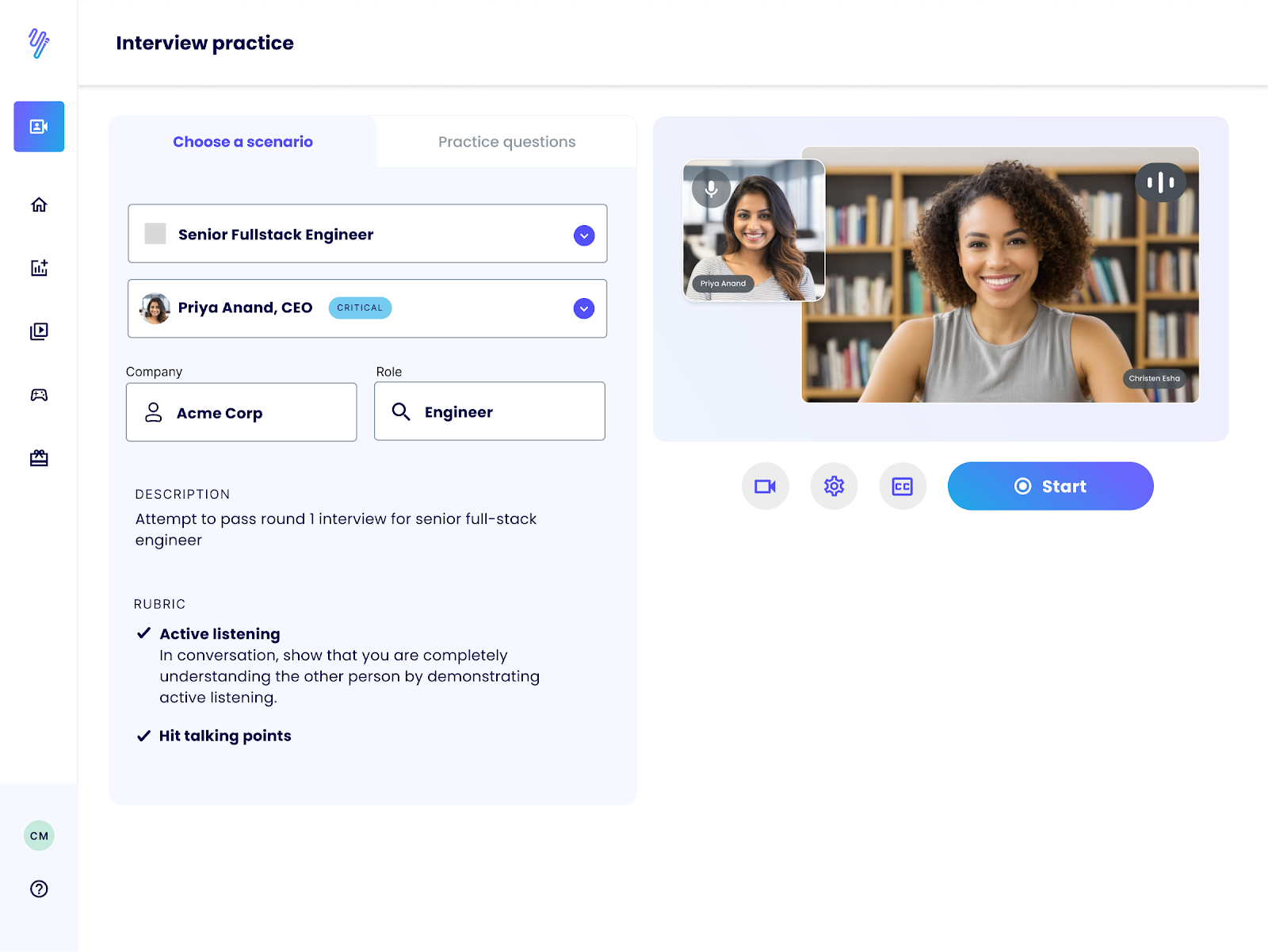
Create a Scenario: Pick a technical or behavioral interview and input job details manually or via PDF upload, or with a job description link.
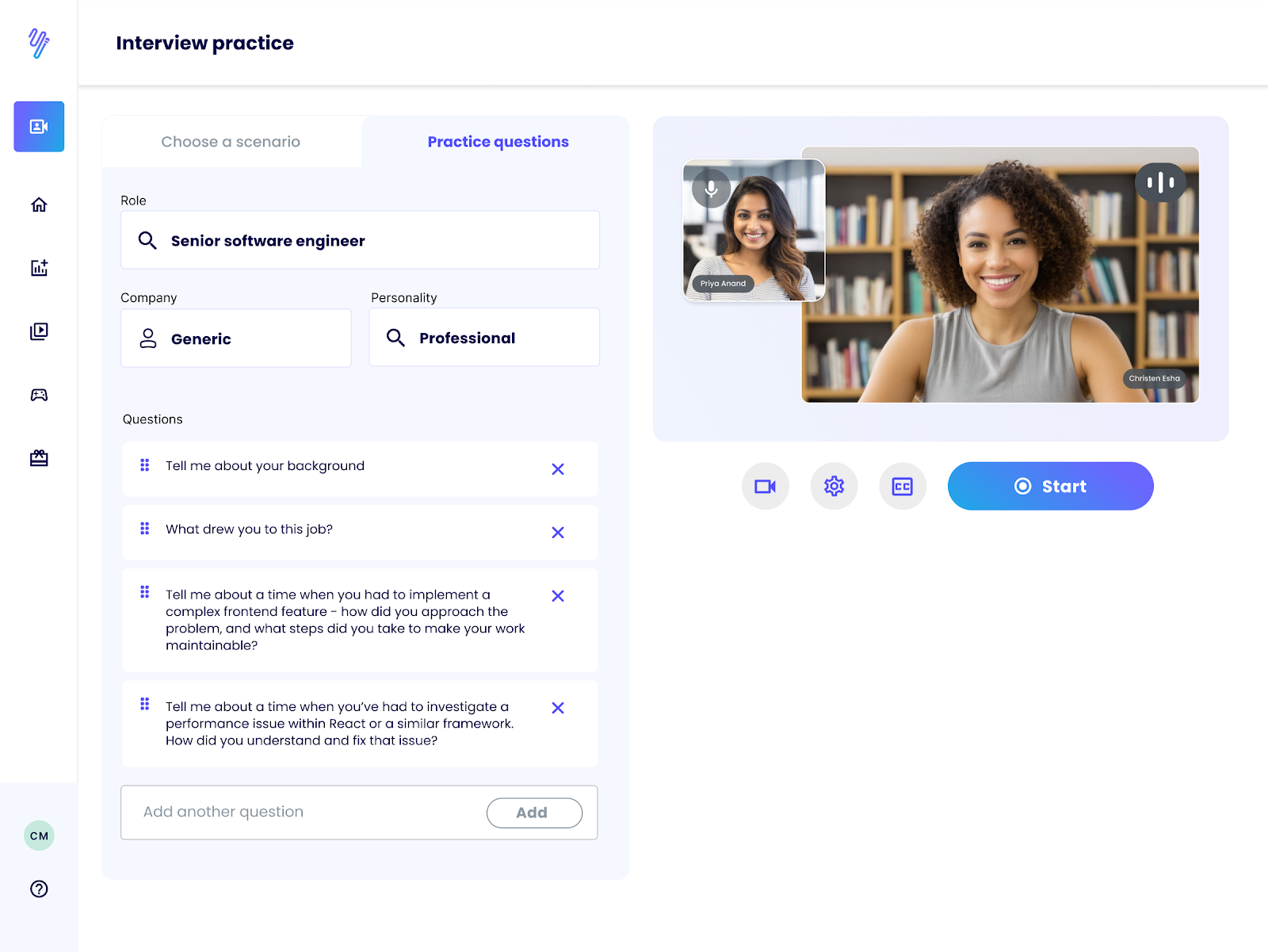
Add Context and Questions: Enrich your roleplay with relevant context and potential questions from Yoodli’s extensive question bank or your own custom list.
Practice and Perfect: Select the scenario in “Choose a scenario” mode to engage with the AI interviewer or focus on specific questions in “Practice Questions” mode.
Try It Out
Don’t leave your dream job to chance. Log in to Yoodli and give Interview Roleplays a spin. It’s fast, fun, and designed to help you shine. Got questions? Our support team’s got answers at support@yoodli.ai
We built this for your success—so let us know what you think! 🚀
You’ve probably heard the term “business casual” before. But knowing exactly what that includes can be a bit more tricky. After all, styles and trends are constantly evolving, as are workplace standards.
This ultimate guide to business casual will break down what it is and highlight tons of outfit ideas, along with what not to wear.
What Is Business Casual?
Business casual is a type of attire that’s generally traditional business clothing but in more relaxed or “casual” styles. This type of attire is considered appropriate and professional for an office environment, among other scenarios.
With the push to return to the office, understanding this type of attire is more important than ever.
Business casual vs. smart casual
Whereas business casual is traditional business clothing in casual styles, smart casual is professional yet more informal and more relaxed than the former. Smart casual is more toned down, too. It’s almost like a professional spin on casual clothing.
Many industries seem to prefer smart casual, such as:
Design
IT
Media or communications
Advertising
Business casual vs. business professional
The main difference between business casual and business professional is that the latter is more professional. Business professional is that it’s more traditional and formal.
Usually, more “conservative” industries require employees to wear business professional, such as:
Finance
Government
Law
When to Wear Business Casual
Business casual is a popular choice of attire in many different scenarios. Many offices require or expect employees to dress in business casual. For example, people who often have client meetings or other important, in-person meetings should probably err on the side of caution and steer clear of more casual dress. Even casual lunches in the office most likely require a nice fit.
Similarly, industry events like conferences are another great place to wear your best looks.
You should also plan to wear business casual during interviews, whether they’re in-person or online. If you have an interview coming up, do a practice run with Yoodli’s interview simulator.
Start by downloading Yoodli to your desktop for free. This speech coach will provide you with critical metrics — from your speaking pace to your word choice and filler word usage — to highlight specific areas you can improve in.
Yoodli’s realistic interview flow allows you to practice specific questions, such as Coca-Cola interview questions, to best prepare. You can even customize your interviewer to change the tone from friendly to serious.
Learn more about Yoodli’s interview flow below:
If you have an interview coming up, put on your best business casual and practice interviewing with Yoodli.
Gender-Based Business Casual Examples
Many business casual examples are gender-based. To be clear, this type of attire is for people of every gender.
However, if you’d like to explore more gendered examples, here’s some guidance about what types of outfits and pieces you might want to experiment with.
Men’s business casual
If you’re interested in men’s business casual, you’re in luck: it’s extremely versatile and there are many options.
For example, some tops that are appropriate for men’s business casual include pieces like:
Knit shirts made of lightweight fabrics
Polos (pique fabric and cotton are popular choices)
Sweaters (cotton blends, cashmere, and merino wool are your best bets)
Button down shirts
Even T-shirts can work, as long as they have clean lines and a more tailored fit. Just make sure with men’s outfits, your top and bottoms should be in solid colors or at the most, simple patterns.
With regard to bottoms, the best men’s business casual examples include things like:
Corduroy pants
Chinos, which have many textures and colors to choose from
Khakis
Jeans, as long as they have a tailor fit and are dark wash
Dress pants (common choices are blended fabrics, cotton, and wool)
Bottoms should be in classic, neutral tones such as navy, beige, olive, or gray.
For your footwear, you might want to explore options like:
Dress shoes (leather, faux leather, and leather alternatives are commonplace)
Brogues or oxfords
Loafers (both suede and leather are popular picks)
Desert boots or chukka boots are also acceptable, depending on your overall look.
There are also plenty of men’s accessories you could experiment with as well. In your arsenal, you could have watches (aim for those with metal or leather straps and traditional styles), a variety of leather belts, pocket squares, or scarves.
If you’d prefer men’s accessories that lean toward the formal side, tie bars and cufflinks are also good choices.
Women’s business casual
Just like men’s, there are tons of women’s business casual options to try. You might consider experimenting with multiple pieces and combinations to find exactly what you like.
For women’s business casual tops, there are plenty to choose from, such as:
Button-down shirts (try chambray or cotton options)
Cardigans, which come in lots of different colors and textures
Blouses (popular choices include blended fabrics, silk, or cotton)
Turtlenecks (or mock turtlenecks)
Knit sweaters (cotton blends, merino wool, and cashmere are go-to’s)
Like men’s, make sure any women’s business casual tops don’t have busy patterns. Opt for more simple, subtle patterns and styles.
With regard to women’s business casual bottoms, you could consider items like:
Corduroy skirts or pants
Chinos
Dress pants (shoot for cotton, blended fabrics, or wool)
Jeans, as long as they’re a dark wash with a tailored fit (and no holes or distressing)
Skirts, including styles like A-line skirts, midi skirts, or pencil skirts
Like the tops, your bottoms should also be in neutral tones.
Women’sfootwear includes many different options, such as:
Booties or ankle boots
Flats or ballet flats (both suede and leather are popular choices)
Pumps
Loafers (including both leather and leather alternatives)
Brogues or oxfords
There are tons of great complimentary accessories for women’s outfits. For example, you could explore items like:
Earrings or statement necklaces
Leather belts (there are many different colors to choose from)
Wraps or scarves (cashmere and silk are common options)
Things like tie bars, cufflinks, and watches are great options.
Gender-neutral options
You don’t have to be a man to wear men’s dress or a woman to wear women’s clothing. However, if you’re looking for more androgynous, gender-neutral options, there are some great examples to consider.
For example, some gender-neutral tops include options like:
Button-down shirts
Cardigans
Blouses
Knit shirts
Polos
Turtlenecks (or mock turtlenecks)
Knit sweaters
Heavier sweaters
Remember, neutral colors and simple or subtle patterns are best. That goes for bottoms, too. In terms of bottoms, consider gender-neutral examples like:
Corduroys
Chinos
Dress pants
Dark-wash jeans with a tailored fit
Khakis
Skirts (experiment with different styles)
For footwear, most options are naturally gender-neutral examples, such as:
Dress shoes
Desert boots or chukka boots
Pumps or loafers
Brogues or oxfords
Flats
Ankle boots or booties
Accessories like belts, watches, wraps, scarves, necklaces, earrings, and cufflinks are all gender-neutral examples.
Common Business Casual Examples
For more specific common business casual examples, sometimes it helps to consider particular types and styles based on the kind of clothing. Things like shoes, dresses, and full outfits can help give you some idea of what you might like.
Plus, having a few examples of what this type of attire can look like is essential for anyone working in retail.
Business casual shoes
There are plenty of business casual shoes you can mix and match with your outfits. Close-toed shoes are usually a good bet, too.
Some specific examples of business casual shoes include:
Penny loafers
Chelsea boots
Oxfords
Borgues
Ballet flats
Loafers
Ankle boots
Moccasins
Chukka boots
Derby shoes
Wingtips
Boots
Flats
Booties
Pumps
Remember, flip-flops are definitely not business casual shoes.
Business casual dresses
In terms of business casual dresses, the versatility of styles is something many people appreciate.
For example, some of the best options for business casual dresses include things like:
A-line dresses
Sheath dresses
Wrap dresses
Shift dresses
Knit dresses
The most important thing to keep in mind about dresses is that all of these styles offer different looks that can be dressed up or down with accessories. Opt for neutral tones and simple patterns.
Business casual outfits
Because this type of attire is so versatile, there are tons of potential business casual outfits to try and experiment with.
For example, some of the most common business casual outfits include looks like:
A polo shirt paired with chinos and leather (or faux leather) loafers
A knit sweater paired with a skirt (here, you can experiment with skirt lengths and styles) and pumps
A cardigan over a plain T-shirt and dark wash jeans with a tailored fit and derby shoes
A button-down shirt with khakis and penny loafers
A sweater with dress pants and oxfords
A clean T-shirt with a tailored fit and dark wash jeans (without rips or holes) and ankle boots
A blouse with dress pants and flats
A turtleneck (or mock turtleneck) with chinos and loafers
Of course, this isn’t an exhaustive list. Don’t be afraid to try multiple outfits. It might take a minute to find your favorite styles.
Plus-size options
You should feel comfortable wearing this type of attire no matter what size your body is. There isn’t a fit that someone can’t wear because of their body type. But there are also some specific plus-size business casual options that might be helpful to consider.
For example, experiment with tops and bottoms like:
Sweaters (steer clear of the more boxy or ultra-tight options)
T-shirts with tailored fits
Skirts, which come in a variety of styles and lengths to experiment with
Dark wash jeans with a tailored fit (bootcut or straight are both great options)
Blouses (try different styles, such as peplums, wrap tops, or button-downs)
Cardigans
Dress pants with tailored fits
Chinos
With plus-size business casual, just remember that you should feel self-confident and comfortable with the outfits. It might take a bit of experimenting to find exactly what you like.
Types of Business Casual
There are also many different types of business casual attire. For example, options can vary based on the season or time of year.
Spring business casual
With spring business casual, the idea is to dress for the longer days and warmer weather. You’ll also have a little more freedom incorporating different patterns into your outfits. Aspects like brighter colors and lighter fabrics are essential for spring business casual.
Some specific examples of spring business casual clothing include looks like:
A sweater with dress pants and and ankle boots for cooler spring days
A blouse with a floral pattern paired with a skirt and flats
A turtleneck with chinos and loafers, for a cooler day
A button-down shirt with linen pants and chelsea boots
A T-shirt with a tailored fit paired with dark wash jeans and ballet flats
A knit sweater with an A-line skirt and booties
You can also dress these outfits up with accessories like statement necklaces, a leather watch, or earrings.
Summer business casual
As the temperatures continue to rise, summer business casual options should prioritize breathable fabrics and comfortable footwear. Like spring, you can also emphasize brighter colors, bold or playful patterns, and prints.
For example, some specific summer business casual pieces could include fits like:
A light-weight button-down shirt (think linen, chambray, or cotton) with khaki chino pants and loafers
A linen, light-weight sweater with dress pants and pumps
A vibrant blouse paired with a floral skirt and flats
A turtleneck with cropped pants and ankle boots
A polo shirt with khakis and dress shoes
A fitted T-shirt with dark wash jeans and ballet flats
A cardigan or knit sweater paired with tailored pants and booties
Fall business casual
Once the weather starts to get a bit cooler, you can experiment with some fall business casual options. In particular, you might opt for some more neutral or earthy tones and richer textures.
Some fall business casual outfit ideas could include looks such as:
A knit sweater (think cashmere or merino wool) with dress pants and leather loafers
A turtleneck with tailored jeans and chelsea boots
A cardigan layered over a blouse paired with a neutral skirt and ankle boots
A turtleneck with an A-line skirt and neutral flats
A warm-toned button-down shirt with chinos in earthy tones and a pair of dress shoes
A polo (opt for piqué fabric or heavier cotton) with corduroy pants and loafers
A knit sweater dress in a neutral color paired with a statement necklace and booties
A blazer over a blouse with dress pants and flats
Winter business casual
For winter business casual, you’ll likely want to prioritize warmth. Layered looks, rich textures, and cozy knits are great options.
Some of the best choices for winter business casual looks include outfits like:
A cozy knit wrap dress with boots
A warm wool sweater with dress pants and loafers
A polo shirt layered under a cardigan with dark wash jeans and penny loafers
A sweater dress with tights and neutral-toned flats
A button-down shirt with a sweater vest and chinos, paired with dress shoes
A turtleneck with tailored, dark wash jeans and boots
A blouse with a knit cardigan and a skirt, paired with flats
A turtleneck with an A-line skirt and neutral-toned booties
With winter looks, make sure to take advantage of layers and accessories with gloves, hats, and scarves to keep warm.
Smart business casual
Because smart business casual is a subtype, there’s a bit more freedom in the types of outfits you could try.
For example, some smart business casual fits you might experiment with include looks like:
A polo shirt with a structured fabric paired with chino pants and leather loafers
A sports jacket or blazer over a polo shirt and dress pants with dress shoes
A knit weather with a midi skirt and flats or penny loafers
A sheath dress underneath a blazer or tailored jacket with booties
A button-down shirt with tailored chinos and dress shoes
A cashmere sweater with dress pants and leather loafers
A chiffon blouse with tailored pants and chelsea boots
A merino wool cardigan with tailored, dark wash jeans and booties
Smart business casual is pretty versatile, so be sure to try many types of clothing and styles to see what works best.
What Not to Wear
Of course, there are some important clothing items that are not considered business casual, and it’s useful to know what exists outside of that type of attire so you can avoid it.
For example, some clothing, styles, and accessories that aren’t considered business casual include things like:
Clothes that have logos, graphics, or text that could be considered inappropriate (such as curse words, vulgar speech, non-inclusive language, or lewd images)
Tops that show lots of cleavage (although some more body-positive workplaces won’t discriminate based on this factor)
Backless tops or crop tops (but some workplaces are more lenient in this area)
Shorts
Very tight, form-fitting clothing, or clothing that’s considered “too short” (although again, some workplaces have a more liberal attitude toward this type of clothing)
Wrinkled or stained clothes
Tennis shoes or athletic shoes, especially old, dirty, or well-worn ones
Clothes that are too loose or “oversized” clothing
Clothing that has holes in it, such as skinny jeans with holes cut out near the knees
Flip-flops
Business Casual Trends
As of late, there are a few noteworthy trends that have cropped up. Loosely keeping track of the various trends in outfits can help you diversify your wardrobe as well as your looks.
For example, prioritizing comfortability is more common, even with this type of attire. People opt for cozy knit sweaters and soft fabrics over starchy tops. Breathable, lightweight options like Tencel, cotton, and linen are great picks. Relaxed silhouettes are another aspect of this comfortable trend, specifically wide-leg pants, oversized blazers, and loose-fitting pants.
Whereas this type of attire used to be limited to neutral colors, bolder patterns and more vibrant hues are more trendy today. Today, geometric patterns, stripes, and floral prints are especially popular.
In the past, sneakers and tennis shoes were frowned upon. However, elevated sneakers are more popular than ever, and increasingly appropriate as part of anoutfit. If you’d like to experiment with sneakers choose shoes with minimalist, simplistic designs and neutral tones.
Of course, thrifting and sustainable clothing is another “trend” that’s gained traction. Instead of supporting fast fashion to build a wardrobe, people have turned to secondhand clothing in the form of family hand-me-downs or thrift store finds.
The Key Takeaway
Finding some business casual outfits that make you happy and are also comfortable and stylish shouldn’t be as difficult when you have an idea of what you like.
Having some versatile pieces you can mix and match — such as blouses and button-downs with corduroy or dress pants — are all you need.
Coca-Cola is one of the world’s largest beverage companies, with a reputation for excellence in marketing and brand management. If you’re looking to work for this global giant, then you’ll need to pass their rigorous interview process.
In this article, we’ll delve into everything you need to know to ace the Coca-Cola interview, including the 20 most common Coca-Cola interview questions you could face.
What to Know About Coca-Cola
Coca-Cola is an iconic beverage brand that began in Atlanta, Georgia, as a soda fountain in 1886. Although it wasn’t very popular at first, Coca-Cola eventually took off and evolved into one of the most well-known, recognized sodas available.
Not only is it a celebrated company and product, but Coca-Cola is also a great company to work for. Here’s everything you need to know about the Coca-Cola company and working there.
Coca-Cola positions
As a large Fortune 500 company, Coca-Cola offers a plethora of different positions, ranging in both category and seniority. The categories of these positions include:
Although these are just a few examples, if you’re interested in a Coca-Cola position, the next step is to apply for a role.
How to apply to Coca-Cola
Applying to Coca-Cola is actually pretty easy. To apply, visit the careers page on the company website.
Here, you can preload your application by connecting your LinkedIn profile. You can also simply upload your resume or CV from your computer. Even if you automatically upload your experience and work history from your LinkedIn profile, double check it to make sure everything looks correct. Coca-Cola recommends tailoring your skills and experience to the specific position description to better your chances of getting an interview.
If you happen to know someone who already works at Coca-Cola, ask them for advice. They can tell you a bit more about the company, including the work environment and company culture. Current Coca-Cola employees can also refer candidates through an internal system, so if you know someone currently employed there, they can “officially” recommend you.
What to Expect When Interviewing with Coca-Cola
Here’s what to expect when interviewing with Coca-Cola. The interview process typically involves multiple rounds, including a phone screening, a video interview, and an in-person interview.
After your online application is accepted, a global recruiter will directly reach out to you to talk about your work history, skills, and experience. During this call, you can ask more about the company, the position, and the team you’d be working with. If you’re selected to move forward in the process, you’ll be invited or notified of another interview.
Usually, at least one of your interviews will be a one-on-one conversation with an interviewer and one will be with a panel of interviewers. For the panel interview, interviewers will usually include a manager and other team members. It can vary on a case-by-case basis, but these two types are pretty typical for Coca-Cola.
During these rounds, you’ll likely be asked a range of behavioral and technical questions. That being said, you’ll need to demonstrate your ability to think on your feet, communicate clearly, and showcase your experience and skills.
If you complete all your interviews and Coca-Cola deems you a good fit for the position, you’ll get an offer. The offer is usually verbal to start. A recruiter will call you to tell you about the offer before sending an official offer letter, often in the form of an email.
If you accept, it’s likely that the company will conduct a background check.
Is it easy to get hired at Coca-Cola?
Actually, scoring a position with Coca-Cola can be rather difficult, given that it’s a Fortune 500 company with a large reputation. It’s not impossible, but due to its reputation, Coca-Cola receives an incredible volume of applications, so it isn’t easy to get hired at Coca-Cola.
How hard is the Coca-Cola interview?
Coca-Cola is known for having a rigorous interview process, and many candidates find it challenging. The company is looking for the best of the best, and they have high expectations for their candidates. However, with the right preparation and mindset, anyone can succeed in the Coca-Cola interview.
How long is the Coca-Cola hiring process?
Because the interview process usually involves a few different rounds, the Coca-Cola hiring process isn’t necessarily a quick one. In fact, when completing the online application itself, it can take about a month to schedule an interview.
In terms of the entire hiring process, it can take an average of 4-8 weeks to get hired at Coca-Cola. Of course, this isn’t a hard number and it can depend on multiple factors.
Does Coca-Cola drug test?
Yes, Coca-Cola does drug test potential hires in the form of a pre-employment drug screening. Usually, the drug test is a urine panel paid by Coca-Cola and conducted in a private lab.
If Coca-Cola suspects an employee is using drugs, the company also has the authority to conduct random drug tests. In this case, a positive drug test could lead to further consequences, such as termination.
What are the perks of being a Coca-Cola employee?
Coca-Cola employees receive all sorts of benefits and perks. A Coca-Cola employee’s benefits package could include things like:
Medical plans
CVS Caremark® Prescription Drug Coverage
Dental plans
Vision plans
Supplemental health plans (like accident or critical illness plans)
Financial programs (like 401(k)s, life insurance, and legal assistance plans)
How to Practice for the Coca-Cola Interview
To increase your chances of success in the Coca-Cola interview, it’s essential to practice beforehand. One effective way to improve your interviewing skills is by using Yoodli. Yoodli is an interview coach that uses generative AI to help you enhance your interviewing skills in a judgment-free environment.
Yoodli provides AI-powered feedback on your Coca-Cola points, filler words, rambling, body language, and much more. You can even use Yoodli’s interview simulator to practice actual Coca-Cola interview questions.
You can practice for your Coca-Cola interview through Yoodli’s interview simulator.
During your actual interview, Yoodli will give you private and gentle nudges (without the interviewer knowing) to help you hit your main talking points, make eye contact, slow down, and more. Start your interview prep journey for free at www.yoodli.ai.
Learn more with our helpful explainer video:
Ace your Coca-Cola interview with this private AI speech coach.
In addition to using Yoodli, here are some other tips for practicing for the Coca-Cola interview:
1. Research the company’s values, mission, and culture. Coca-Cola is a company with a strong brand and values, and it’s essential to understand them before going into the interview.
2. Review the job description carefully. Make sure you understand the requirements of the role and the skills and experience needed to be successful.
3. Practice answering common interview questions. (See the next section for a Coca-Cola interview question bank.) Practice in front of a mirror or with a friend to get comfortable answering questions out loud.
4. Use the STAR method to structure your responses. The STAR method is an effective way to answer behavioral questions. It involves outlining the Situation, Task, Action, and Result of a past experience.
Most Common Coca-Cola Questions
The questions that are asked at Coca-Cola interviews usually fall into one of three categories: behavioral, technical, and culture fit. Behavioral questions are open-ended questions that are asked to gauge your personality, work style, and communication style, among other things.
On the other hand, technical questions are specific to the position you’re applying for. So, for example, if you were applying for an advertising position, the interviewers might ask something like, “What’s a recent marketing campaign that you liked?”
Culture fit questions are usually asked to make sure you’ll fit it with and adhere to the organization’s teams and the company’s core values.
20 most common Coca-Cola interview questions
To help you prepare for the Coca-Cola interview, here’s a list of the 20 most common questions that you might encounter:
Tell me a little bit about yourself. (For this question, make sure you have an elevator pitch ready to go.)
Why do you want to work for Coca-Cola?
Why do you want to leave your current job?
What do you know about our products and services?
Tell me about a time when you had to resolve a conflict with a coworker.
What’s your biggest strength? Weaknesses?
What skills and experience do you have that make you a good fit for this role at Coca-Cola?
Give me an example of an idea of yours that helped make your team more efficient.
At Coca-Cola, there may be times where you have to work in high-pressure environments. Tell me an example when you worked well under pressure.
How do you stay up-to-date with the latest food and beverage industry trends and technologies?
How do you prioritize your workload?
Tell me about a time where you failed.
How would you handle a problem with Coca-Cola procedure or policy?
Describe a project you completed that you are particularly proud of.
What kind of work environment do you thrive in?
Tell me about a time when you had to make a difficult decision.
If you could change one thing about Coca-Cola, what would it be?
Give me an example when you had to think outside the box to solve a problem.
How do you handle stress and pressure?
How do you plan to make a difference at Coca-Cola?
Remember, it’s essential to use the STAR method to structure your responses to behavioral questions. Additionally, be prepared to provide specific examples and metrics to back up your answers.
The Bottom Line
The Coca-Cola interview process is known for being rigorous, but with the right preparation and mindset, anyone can succeed. By practicing your interviewing skills and familiarizing yourself with the company’s values and culture, you can increase your chances of landing the job.
Remember to use the STAR method when answering behavioral questions and be prepared to provide specific examples and metrics to back up your answers. You can practice responding this way through an AI speech coach like Yoodli. With persistence and dedication, you can crack the Coca-Cola interview and start your career with this global giant.
College interviews are an extremely stressful part of the college application process. Many high-schoolers, including me, lost sleep cramming for these interviews. However, these interviews aren’t nearly as scary as they appear to be at first.
Let’s delve right into tips that will help you leave an impression on your college admissions committee!
5 Tips to Succeed in Your College Interview
Give mock interviews.
One of the best ways to prepare for these college interviews is by practicing sample questions. According to Forbes, mock interviews are very helpful in preparation for these interviews. Try getting friends or family to ask you a few questions before the interview like:
What attracts you to this college?
What do you want to major in? Why?
How would your friends describe you?
Answering these questions will get your thoughts rolling and get feedback from your peers. This will give you a good base to work on and engage in meaningful conversation with your college interviewer.
Practice common college interview questions.
Your interviewer will likely ask you a few obvious questions. Practicing responses to these will help you make your answer precise and interesting. Here is a more exhaustive list of common college interview questions for you to practice with links that have tips on how to answer them!
Record yourself and listen to your answer on Yoodli! Yoodli’s AI-backed speech coach can help you identify areas of your speech that need improving and also help you reduce filler words. You can also assess your body language, the amount of eye contact you’re making, and self-evaluate your performance.
Research campus life at the college.
Colleges want to believe they’re your top choice, and that you’re genuinely interested in them and will enroll if offered admission. Many colleges use demonstrated interest as a factor in the admissions process. Therefore, it is vital that you research these universities before your interview. They must get the sense that they are perfect for you in addition to you being perfect for them. Here is a list of things you can research about the college before your interview to show genuine interest:
Mission of the college and how it resonates with you.
Campus size, both in size and student population, and how it fits with your personality.
Faculty research projects that interest you.
Clubs and Organisations at the college that interest you.
Think about things like racial diversity, weather, location, etc. that might attract you to the college.
Courses offered at the college that you want to take.
Pay the college a visit if you can, and talk about your experience visiting the campus.
According to US News, 13.7% out of the surveyed colleges in a report rated demonstrated interest as considerably important while 25.5% said that it was moderately important. This is testament to the fact that researching these universities thoroughly is essential and a well-informed interviewee will definitely stand out.
Be authentic in your college interview.
It’s cliche (we know!), but it cannot be stressed enough. It is common for high school students to get lost in the process of projecting themselves to be perfect. “What is your favorite book?” is a common question. Remember to stay concise while demonstrating your curiosity.
Here’s what you should NOT pick:
Works that you were obviously assigned in class: Part of this question is to see what you read outside of class. If you name To Kill a Mockingbird or Hamlet, you’ll sound as if you’ve never read anything but assigned books.
Juvenile fiction: You don’t need to hide your love of Diary of a Wimpy Kid or Redwall books, but these works are also loved by kids much younger than you. You’d do better to recommend a book that is more in line with a college-level reader.
Works chosen simply to impress: Let’s be honest,James Joyce’s “Finnegans Wake” is not your favorite book. College interviewers are human, and they have likely been through this exact same process. They know the tendency of high schoolers to pick works purely to impress.
Here’s what you SHOULD pick:
Pick a book that you sincerely love and that you are comfortable talking about.
Pick a book with enough substance to it so that you can explain why you like the book.
Pick a book that is at an appropriate reading level; something that is a huge hit among fourth-graders is probably not your best choice.
Pick a book that gives the interviewer a window into your interests and passions.
Go to your college interview using professional body language.
As much as this interview is meant to be a casual conversation to get to know you, you must not lose sight of the fact that it is still an evaluative interview. Professional body language makes an impression – from wearing semi-formal or formal outfits, to maintaining eye-contact and speaking confidently. You do not want to come across as extremely nervous, nor do you want to come across as lethargic and lazy.
Here are a few things to keep in mind before your college interview:
Maintain strong eye-contact with your interviewer: This will help you come across as someone who is confident in their own abilities. Yoodli’s record speech feature will allow you to access statistics such as eye-contact time percentage, and improve!
DO NOT wear casual clothes: Please do not show up for your interview in shorts and a round neck! While you certainly do not need a suit, wearing a semi-formal outfit is helpful
Speak slowly and calmly: Do not appear to be in a rush to speak. You may sound over-rehearsed, and this might be ticking off. Pause while speaking and avoid filler words. You can record your answers and upload them on Yoodli here, and track your pause times, filler words, and pace variation to help you improve!
Tying up the Loose Ends
Please remember that college interviews are not the end of your life! These are just a part of the application process and a bad interview does NOT kill your chances of admission. Alternatively, however, a really stellar interview shall also not make up for your lack of test scores or activities. These interviews are meant to get to know you better, and put a face on your resume. Nevertheless, the concern around interviews is valid, and hopefully these tips will help take away some of it.
What’s Next?
Now that you know what you have to do, you can get cracking with your interview prep and practice your answers on Yoodli. Record yourself answering the questions, and listen in without the pressure of an interviewer, peer or family member! Use Yoodli’s transcription tool to make sure what you’re saying is clear and understandable. Lastly, just remember to be calm and go for the interview with a clear mind. Don’t overthink! We believe in you.