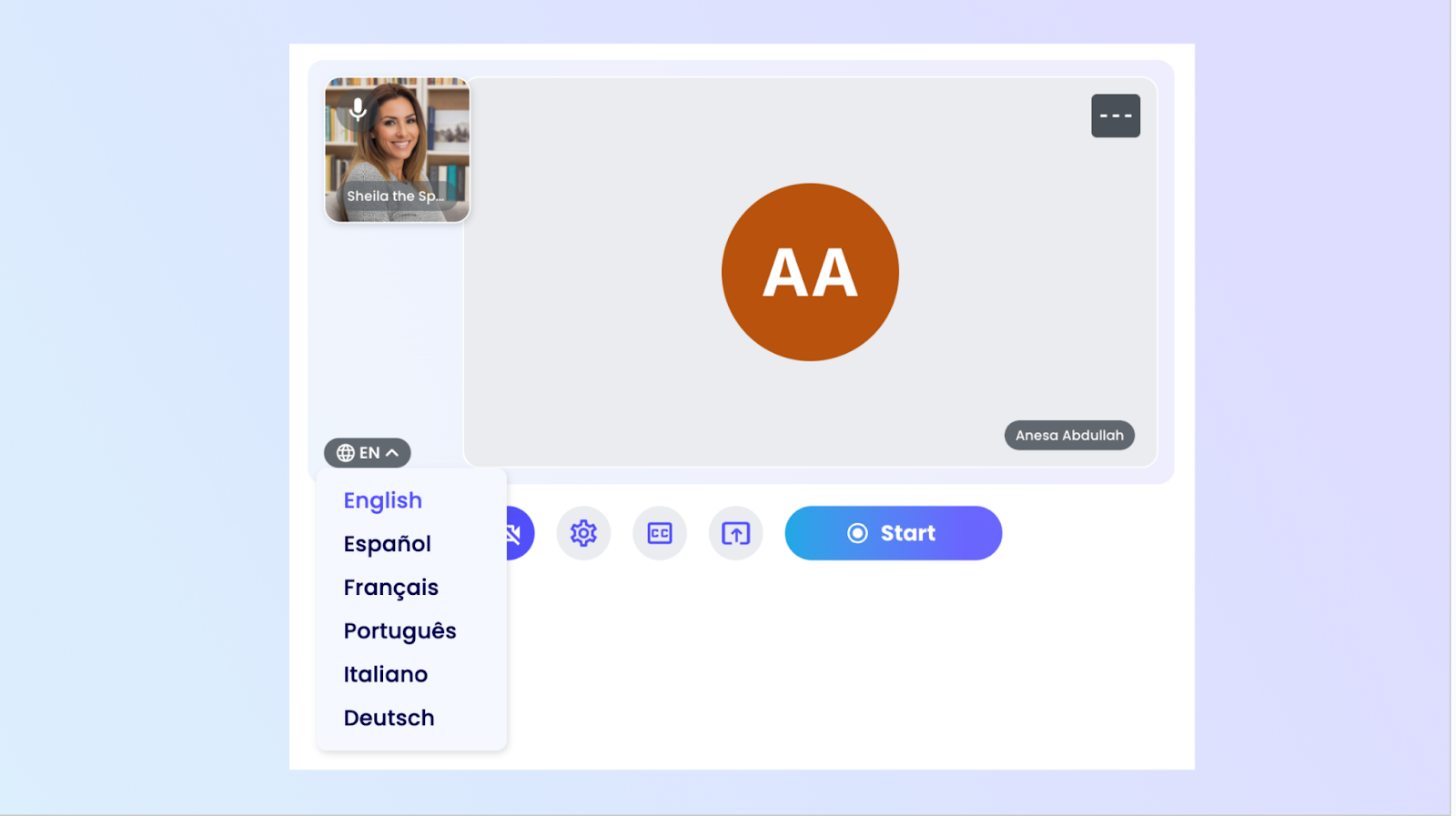
Yoodli and The 100th Monkey, a dynamic consultancy and training company based in the UK, announce a strategic collaboration to enhance learning retention through AI-powered coaching. The 100th Monkey specializes in ensuring that training experiences lead to lasting change, and with Yoodli’s AI-driven technology, this process becomes even more effective. Introducing iMO, a cutting-edge practice and coaching tool designed to reinforce learning after training sessions.
Enhancing Learning Retention with AI-Powered Coaching
The 100th Monkey has long been recognized for delivering impactful training programs. Now, with iMO powered by Yoodli, learners can transition from knowledge acquisition to long-term skill mastery through interactive coaching.
iMO strengthens learning and development efforts by reinforcing training content, ensuring key takeaways translate into real-world improvements. Key features include:
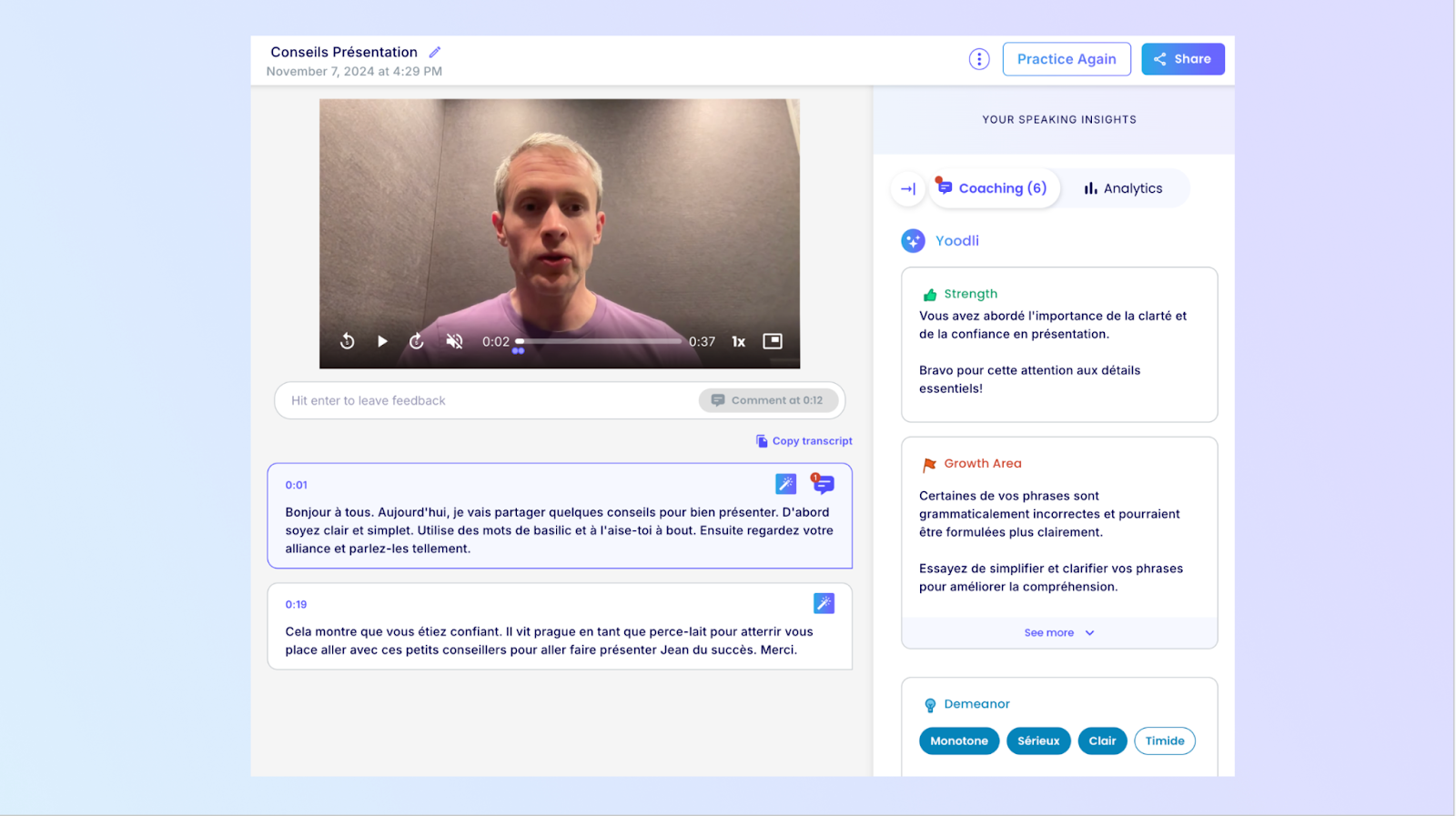
Advanced Communication Coaching: iMO provides AI-generated insights on pacing, tone, filler words, word choice, and delivery to help professionals refine their speaking and presentation skills.
Simulated Workplace Conversations: Customizable roleplays allow individuals to engage in realistic scenarios, receiving private and data-driven coaching aligned with The 100th Monkey’s established frameworks. The platform can be customized to reflect each organization’s unique culture and real-world situations, ensuring relevance and practicality.
Sustained Skill Development: iMO delivers mini, personalized programs designed to focus on areas for improvement identified during training sessions, enabling learners to continuously apply and reinforce training insights, improving retention and effectiveness over time.
Data-Driven Progress Tracking: Personalized reports offer measurable insights into communication improvements, helping organizations track development and ROI.
Scalable Learning Solutions: Available on demand, iMO makes high-quality coaching accessible across teams and organizations, extending the impact of learning initiatives.
“At Yoodli, our mission is to make expert communication coaching accessible and results-driven,” said Varun Puri, CEO at Yoodli. “By partnering with The 100th Monkey, we are equipping professionals with AI-driven tools to enhance confidence, master essential skills, and foster workplace success.”
Richard Edwards, Co-Founder of 100th Monkey, said: “We saw an instant impact with delegates ten years ago when we pioneered bringing data into our soft skills courses. They loved the objective feedback and tangible steps to progress their communication skills. Since then we have continued to seek ways to unlock the science of speaking, and it has been a long held desire to develop an AI tool that we trusted could generate accurate data, align to our frameworks, and complement our way of thinking. This is why we are so delighted to have found and partnered with the brilliant people of Yoodli. The platform really is a game changer for both delegate experience in-session, and critically, for continued learning, post training.”
About The 100th Monkey
The 100th Monkey is a consultancy and training firm based in Bristol, UK, serving clients globally. Their expertise spans:
Personal Development: Award-winning programs designed to enhance skillsets, mindsets, and overall professional effectiveness.
Team Effectiveness: Tailored workshops and offsites to strengthen team performance, decision-making, and strategic direction.
Leadership Consultancy: Partnering with organizations to refine strategies, improve communication, and operationalize business plans.
Yoodli is an AI-powered communication coaching platform that offers private, real-time, and judgment-free practice opportunities for professionals and GTM teams. Trusted by Fortune 100 companies, including Google, Yoodli’s SOC2 Type 2 and GDPR-compliant technology enhances sales training, objection handling, leadership development, and more. The platform is used by Toastmasters International, top business schools, and professionals in over 150 countries.
Yoodli and The 100th Monkey share a vision of empowering professionals with the tools needed to succeed in today’s evolving workplace. iMO bridges the gap between learning and real-world application, delivering an innovative, scalable solution that fosters long-term growth and measurable success.
Promoting and maintaining an inclusive work environment is more important than ever, and cultural competence roleplays can help improve your team’s dynamics.
In our beginner-friendly guide, we’ll explain everything you should know about this kind of roleplay enablement, including why cultural competence matters, how to conduct these types of roleplays appropriately, and a few example scenarios to run through with your team.
What Exactly Is Cultural Competence?
Cultural competence is a person’s ability to understand and respect the beliefs, values, and attitudes of cultures outside their own. A large part of cultural competence is not just having that understanding but also knowing how to communicate and interact with people from diverse backgrounds.
However, cultural competence isn’t just respecting other cultures. It also involves:
Fostering a culture of continuous, lifelong learning
It takes effort to invest in your team’s cultural competence, but doing so can create a more equitable, inclusive environment where everyone feels respected, valued, and heard.
Why Cultural Competence Matters (Especially in Today’s World)
In today’s world, we’re more connected than ever. Thanks to technological innovations like social media, people from all over the world can interact, connect, and work together easier than ever before. Today, cultural competence isn’t just a nice skill to have — it’s a necessity for successfully communicating, interacting, and working with folks from diverse backgrounds.
Cultural competence is important because it’s a key component in effective communication and in promoting a more inclusive, equitable environment. In the workplace, for example, teams work better together when everyone is respected and feels valued.
In fact, investing in your team’s cultural competence comes with a ton of benefits, such as:
Leveraging cultural competence roleplays is a great way to start investing in your team.
5 Impactful Cultural Competence Roleplays
Roleplaying can be an effective enablement tool, especially when it comes to subjects like cultural competence. Here are five powerful cultural competence roleplays to introduce to your team.
1. Nonverbal communication differences
Nonverbal communication — like hand gestures, eye contact, or even personal space — can vary wildly across cultures. What’s acceptable or “normal” in one culture might not translate as well in another culture. Miscommunications happen and that’s OK, but how you respond matters.
Imagine a scenario where a difference in nonverbal communication leads to a miscommunication between coworkers. As the team lead, how do you expect your team to address a situation like this one? This kind of scenario can help your team feel more confident about how to handle a nonverbal cultural miscommunication and equip them with the skills they need to make it right and improve interactions going forward.
2. Using inclusive language
Understanding inclusive language and learning how to recognize outdated and even offensive language is essential in any workplace. For this cultural competence roleplay, have your team run through a scenario where someone accidentally uses an outdated term (no need to go into specifics).
The goal of this roleplay is to better understand how to speak up when team members hear something inappropriate. Correcting someone else can be nerve-wracking for some folks, and gaining confidence in how to approach situations like these is crucial for any team. Help your team find a good balance between correcting someone without shaming them.
It should go without saying, but this roleplay scenario shouldn’t invite your team to use inappropriate language like slurs for the sake of roleplaying. You can absolutely achieve the goal of the roleplay without using offensive language.
3. Identifying and responding to microaggressions
Similarly, scenarios that help teams learn how to identify and respond to microaggressions are important, too. Like the inclusive language scenarios, this is not an invitation to “act out” microaggressions. Instead, use this cultural competence roleplay as a means of understanding how to respond.
For example, imagine someone on the team experiences or witnesses a microaggression (again, no need to go into specifics here). How should your team address situations like these effectively and professionally? You want to emphasize educating the person while also staying professional and not adding unnecessary tension.
4. Understanding privilege and what it looks like to be an ally
With this cultural competence roleplay, work with your team to highlight what it looks like to be an ally for others. In this scenario, explore ways you can make sure your work environment and team dynamics are inclusive. This type of roleplay can help employees better understand how to effectively advocate for others while being a good ally in a professional setting.
A scenario like this would pair well with a training or learning on how privilege can affect the dynamics of a workplace, for example.
5. Practicing company protocol for witnessing discrimination and bias in the workplace
Like many of the other scenarios on our list, this one is also not a scenario where your team should “act out” discrimination or bias. Instead, focus on the response to an imagined instance.
For this scenario, task your team with responding after witnessing an instance of discrimination or bias at work. What’s the company protocol for witnessing such an event? This type of cultural competence roleplay can help new hires and existing employees alike better understand company expectations for how to report discrimination in the workplace.
Using Yoodli for Effective Roleplay Enablement
With regard to impactful roleplay enablement, there’s no better option than Yoodli.
Yoodli is a roleplay platform and communication coach that uses AI technology to provide teams with realistic roleplays for workplace enablement. Top brands like Google, Dale Carnegie, Korn Ferry, and others have already used Yoodli for their own enablement programs, and for good reason.
Yoodli’s expansive library offers teams tons of pre-existing roleplay scenarios that they can practice, from performance review simulations to skills training. But Yoodli goes above and beyond to provide brands with next-level roleplay enablement.
In fact, teams can use Yoodli’s Builder tool to design and leverage cultural competence roleplays that meet their individual and team-wide needs. After crafting a custom roleplay scenario, Yoodli’s AI will engage in real time with team members to create a realistic, conversational experience.
You can build custom cultural competence roleplays with ease using Yoodli’s Builder tool.
Not only that, but employees and team leads alike will receive an in-depth report on how they did during their roleplay, with valuable insights around their speech patterns, listening, and delivery. Based on their personalized metrics, Yoodli shares effective, actionable tips to help teams build and develop their cultural competence in the workplace.
Learn more about how you can leverage Yoodli for cultural competence roleplays at https://yoodli.ai/ to create a more inclusive, positive environment for your team.
Core Elements of Cultural Competence Roleplays
To best reap the benefits of cultural competence roleplays, you need to ensure the roleplay scenarios you design include some of the basic core elements Here are some key elements of cultural competence roleplays to keep at the forefront with your enablement programs.
Fostering a culture of open communication and respect
When it comes to cultural competence roleplays, one of the most important elements is making sure to promote an open dialogue and a respectful environment. You want your team to feel comfortable asking questions and engaging in self-reflection. But for that to happen, you need to foster a safe, positive environment.
Encourage your team to ask questions without judgement. Learning from mistakes is a hugely important component of this type of roleplay.
Learning and debriefing after roleplay sessions
In order to best learn from these cultural competence roleplay sessions, incorporate some form of debriefing. For example, maybe you have a list of self-reflection questions for folks to think through later and bring back for discussion.
Whatever the case may be, debriefing can maximize and optimize learning from these roleplay sessions.
Most Common Challenges to Steer Clear of in Cultural Competence Roleplay
Although cultural competence roleplays are important, it’s arguably even more important to make sure you conduct these roleplays the right way. It requires a certain level of sensitivity and concentrated effort to do these effectively. Here are some of the most common challenges to steer clear of when engaging in these types of roleplays.
Avoiding unintentional stereotyping in cultural competence roleplays
The biggest, most critical thing to avoid with these kinds of roleplay sessions is absolutely non-negotiable: Teams must avoid perpetuating stereotypes and discrimination at all costs.
Cultural competence roleplays should never include scenes where team members “act out” racism, discrimination, biases, etc. Nobody should be using offensive language for the sake of a roleplay, for example. Cultural competence roleplays are all about a team’s reaction and response to these situations.
It’s a much better idea to start with some learnings from speakers or experts in DEIB who can educate your team on what kinds of discrimination are common in workplace settings. From there, you can practice cultural competence roleplays to work on your team’s response to witnessing these sorts of situations.
Managing resistance to and discomfort of talking about sensitive topics
When discussing cultural competence or other sensitive topics, like discrimination, you might face resistance or discomfort from your employees. Some folks might feel guilty, defensive, or uncomfortable, and that’s OK.
However, talk with your team about sitting in that discomfort and understanding that this is a safe place for self-reflection and education. Having facilitators and experts in the subject can help tremendously.
The Main Takeaway
Cultural competence roleplays can be a valuable tool for promoting an inclusive, equitable work environment if used appropriately. Investing in your team’s cultural competence can improve team dynamics, employee retention, engagement rates, and overall interactions across teams. Plus, with an AI roleplay tool like Yoodli, it’s easier than ever to incorporate this type of enablement for your team..
Interacting with members of the media isn’t always easy, but media training roleplays can make those interactions easier and more meaningful for your team.
In our thorough overview, we’ll tell you everything you need to know about this type of roleplay, including must-try scenarios, what makes effective roleplays, common challenges to anticipate, and how you can start training your team.
How Media Training Roleplays Prepare Teams
For folks who routinely deal with the media — from researchers to corporate executives and folks working in public relations — media training is an immensely helpful tool that helps people prepare for meaningful interactions with members of the media. But introducing roleplay scenarios that emulate the kinds of situations you might face when interacting with the media can help you better prepare.
Although media interactions are often unpredictable in nature, roleplays can simulate those kinds of situations in a controlled environment. This means teams are free to experiment, practice, and make mistakes without any risk.
Practicing interacting with the media in a risk-free environment has a ton of benefits, including:
Increased confidence in future interactions
Better ability to stay “on-brand” when communicating
Enhanced adaptability skills, especially when it comes to adapting communication styles with different types of reporters
Finding it easier to handle the “tough” questions
What Makes Media Training Roleplays Effective?
Not all roleplays are created equally, and teams need to design their roleplays in a way that makes them effective for their needs. Here are some factors that can affect the effectiveness of your team’s media training roleplays.
Using media training roleplays for different formats
The type of media training roleplays your team uses will depend on your team’s needs. For example, interviews for print (like interviews for a magazine, newspaper, or online article) are different from live TV interviews.
Although you should always be prepared, interviews for print are often “easier” in that you have ample time to prepare and plan out what you want to say. Some publishers even allow sources to edit their quotes after the fact (although that’s less common). However, live TV interviews require you to answer questions live in real time. That means you can’t ask the producer to cut something you said if you misspeak. Leveraging AI roleplays can help folks prepare for live interviews by emulating that real-time question-and-answer format.
Understanding the difference between hypothetical and realistic scenarios
In the world of roleplay enablement, there are two main types of roleplay: hypothetical and realistic. Both kinds can be useful in media training roleplay. With hypothetical roleplay, the scenarios might not be common, but they can be a helpful creative exercise used to keep teams on their toes.
Realistic scenarios, on the other hand, represent the typical situations teams are likely to face when they interact with the media. These could be scenarios like TV interviews, podcast episodes, interviews for print magazines, news conferences, or other everyday scenarios.
9 Dynamic Media Training Roleplays to Try
If you don’t know quite where to start, you’re in the right place. To best prepare your team for interactions with members of the media, here are nine dynamic media roleplays to try.
1. Press conference simulations
One of the unique challenges of press conferences is that you’re usually dealing with multiple journalists. Depending on the exact situation, they might also be shouting questions at the same time, trying to get answers. It’s a complex situation to practice but makes for a great media training roleplay.
In this scenario, assign your team roles: one person can be the spokesperson and the others can be journalists. Have the “journalists” ask rapidfire questions about a topic while the spokesperson remains focused on their message. This kind of roleplay helps folks maintain a sense of authority without getting overwhelmed. Make sure your team practices handling follow-up questions and interruptions without getting too flustered.
2. Media or PR disasters
No matter what industry your team works in, be it research, retail, sales, or something else entirely, media and PR scandals are a possibility. Things like crisis management roleplays can be a great tool to prepare your team.
Imagine a scenario where your brand faces negative press. True or untrue, this media training roleplay scenario hones in on the importance of maintaining a positive brand identity without alienating your audience. Folks can practice challenging misleading headlines or stories, and redirecting questions and conversation that paint the brand in a negative light.
3. Public speaking
Many times, people who work with the media will be asked to give press statements or speeches. Although it seems like a pretty straightforward situation where teams can use a pre-prepared script, it can be challenging for some due to the element of public speaking. Folks who aren’t used to speaking to a crowd or large audience can feel especially anxious or nervous.
In this scenario, have your team practice using clear, concise speech and appropriate body language, like eye contact and hand gestures, to give their statement. This is a great opportunity to practice pacing, tone, and effective delivery in a controlled environment.
4. Responding to difficult or tricky questions under pressure
Knowing how to respond to difficult questions from journalists is tricky to begin with, but it’s even more challenging when you’re in a high-pressure situation. Although these situations are tough to practice, media training roleplays provide the perfect opportunity for teams to engage in these simulations.
For example, have your team field questions around an internal scandal or controversy around the brand. You can work with your team on not panicking when faced with hard questions and pivoting or redirecting without seeming like they’re dodging questions entirely. It’s a tricky balance to maintain, but all the more reason to practice.
5. Confrontational interviews and appearances
Similarly, confrontational interviews and TV appearances can be a true challenge. If you know the interview will be a confrontational one, you can prepare a little bit better with this kind of media training roleplay.
Imagine a situation where your team agrees to an interview specifically to clear up some sort of controversy. Have your team members practice staying calm while also reframing the narrative to protect your brand’s reputation. You can specifically instruct your team to deflect an intense line of questioning without seeming elusive or defensive. It’s easier said than done!
6. Translating jargon into plain language
Especially when it comes to research teams or folks who work in medicine, the ability to translate technical jargon into plain language is crucial for successful conversations with the media. In fact, knowing how to simplify complicated topics for a general audience is a skill anyone can use.
For this scenario, have your team explain a complex topic of your choice to an audience who’s completely unfamiliar. If your team has trouble, consider showing them how using analogies and metaphors can help explain nuanced, complicated topics in a simpler manner.
7. Answering unexpected questions
Although it doesn’t happen all the time, sometimes, folks are invited for an interview on one topic that turns into an unexpected barrage of questions on a completely different topic. To best prepare your team for this situation, imagine a media training roleplay scenario where your team can recognize when it’s best to decline to comment (and how to do so).
You can customize this scenario to fit your needs, but in general, help your team pinpoint when they should tactfully decline an answer. It can be difficult to exit gracefully, but it’s an important skill for anyone undergoing media training.
8. Staying on message when you’re live
Live interviews can be a challenge for folks because you usually don’t know what kinds of questions you’ll be asked. You might get some general guidelines or a list of typical questions, but you never truly know what you’ll be asked until it’s happening. As such, staying on message can be difficult.
With this media training roleplay scenario, have your team practice delivering their main message while also dealing with random questions and pivots. Give your team one primary message to get across during the simulated live interview and sprinkling in some unexpected questions and comments. This scenario also provides a good place to practice delivering solid soundbites (although we’ll dive deeper into this in the next scenario).
9. Producing good soundbites
In the world of news, oftentimes, you only have a minute or even just a few seconds to get your message across. If you get caught rambling, chances are, journalists won’t use your quote. As such, it’s important to practice and know how to produce a good soundbite. For example, if you’re part of a research team conducting research on the effects of alcohol on cancer risk, you want a powerful message. Instead of droning on about the research, you might explain in one or two sentences what impact your work will have on the general public.
Task your team with delivering an impactful, powerful message that describes their purpose in just 20 seconds. This forces them to think about how they can get their message across in the most meaningful way. It helps to use plain language that everyone can understand in short, clear sentences instead of long ramblings that over explain.
How to Use Yoodli for Impactful Media Training Roleplays
When it comes to designing and practicing impactful media training roleplays, there’s no better tool than Yoodli.
Yoodli — an intelligent speech coach and roleplay platform powered by AI — offers next-level, realistic roleplays for anyone undergoing media training. Google, Dale Carnegie, Korn Ferry, and similar companies have already tapped into Yoodli for scalable training and enablement.
Its massive library of pre-existing roleplay scenarios allows teams to practice anything from skills training to performance review simulations, and much more. However, it doesn’t stop there. Teams going through media training can use Yoodli’s Builder tool to ideate, design, and participate in their own media training roleplays.
After creating a custom roleplay scenario, team members will conversate back-and-forth with an AI-generated partner who’s sure to keep them on their toes.
Customize your own media training roleplays to better prepare your team for future interactions.
Once your team finishes their media training roleplays, they’ll get a detailed evaluation of how they did, including data and insights around their listening, delivery, and speech patterns. Yoodli will offer actionable tips and feedback to help them improve for their next media appearance.
Find out how you can start creating next-level media training roleplays for free at https://yoodli.ai/ to better prepare your team.
Most Common Challenges with Media Training Roleplays
Although media training roleplays are useful, they’re not always easy. Here are some of the most common challenges with media training roleplays to be aware of.
Sticking to your talking points without sounding disingenuous
Sometimes, with roleplay, folks tend to have overly scripted responses. This isn’t great because overly scripted responses can lead to sounding disingenuous during actual interactions with the media.
To avoid this, encourage your team to relax and experiment with their roleplay. You want them to take it seriously of course, but at the same time, it’s a risk-free environment where they’re free to make mistakes and learn from them.
Managing anxiety and nerves
Roleplay — especially if it’s new to your team — can be the cause of some anxiety and nerves. New things can feel scary, and if folks have never used roleplay as an enablement and training tool before, they might be hesitant or anxious to try it.
However, promoting a positive, supportive work environment and encouraging everyone to participate can be a good starting place for managing that anxiety. You can even try gamified roleplays to encourage more engagement and excitement around roleplay enablement. Plus, practicing media training roleplays often can lead to desensitization and less anxiety.
The Bottom Line
Using media training roleplays for your team can translate to better, more meaningful interactions with members of the media. They can practice specific situations based on upcoming appearances or interviews as well as more general skills necessary for interacting with journalists. Whatever the case may be, Yoodli can address any of your media training needs with its intelligent roleplays.
No matter how experienced your team is, customer support roleplays can elevate their skills and improve customer satisfaction across the board.
In our comprehensive guide, we’ll give you everything you need to know, including why this type of training works, how it benefits your team, seven must-try scenarios for practice, how to measure the success of your training, and common challenges you might face.
How Do Customer Support Roleplays Fit into Traditional Training?
Customer support and customer service are two similar industries where employees benefit from immersive training methods like roleplay. Traditional customer support training often involves instructional videos, seminars or workshops, peer-to-peer training, and written guides.
However, incorporating customer support roleplays is a great way to add a more interactive element and better prepare your team, especially when it comes to skills like:
Incorporating some crisis management roleplays can also add some additional value to your customer support training program.
4 Key Benefits of Using Customer Support Roleplays
Not surprisingly, there are plenty of advantages to using an interactive form of training like roleplay for customer service and support teams. Here are some of the most worthwhile benefits of using customer support roleplays in your training program.
Interactive and immersive training like customer support roleplays can translate to improved efficiency, as well as faster resolution times. Empowering your customer support team with the skills they need to resolve issues faster is easier than ever, especially with AI roleplays.
Even experienced team members on your customer support team can improve their resolution times with a little bit of roleplay.
2. Better customer interactions
In a similar vein, employees can constantly work on and improve their interactions with customers in a risk-free environment using customer support roleplays. With both peer-to-peer and AI roleplay, employees can practice common interactions — like assisting upset customers or talking customers through a technical issue — multiple times until they feel confident in that particular scenario. This continued practice and improvement naturally leads to better customer interactions.
3. Improved employee morale and engagement
When managers or team leads invest in their workforce with customer support roleplays, it can actually improve both morale and employee engagement levels. That’s because feeling more adept and confident to handle situations with customers directly corresponds with job satisfaction, which boosts morale and engagement.
Employees will face less anxiety during actual customer interactions, and practicing in a team setting can improve the overall work environment of the team.
4. Increased customer loyalty and retention rates
Another huge benefit of using customer support roleplays is that it can lead to better customer loyalty and retention rates. More positive interactions with customers can leave a lasting impact on the client base, making them want to return to the brand because they had such a good experience.
Customer support roleplays give teams a safe space to practice skills like empathy and active listening, both of which work to improve the overall customer experience.
7 Scenarios for Customer Support Roleplays
Leveraging specific scenarios for customer support roleplays can equip your team with the skills they need to succeed in the most common situations. From de-escalation and effectively communicating with angry customers to working through technical issues, roleplay can help prepare your team for actual scenarios they’ll face on the job.
To best prepare your team, here are seven must-try scenarios for customer support roleplays.
1. Dealing with angry or upset customers
One of the most common situations customer service and support teams face in their role is dealing with customers who are angry or otherwise upset. It’s an everyday kind of situation, and it can be hard to practice using traditional methods. That’s where roleplay comes in.
For this scenario, imagine a case where your team receives a call from a customer who’s angry, frustrated, and upset that their item arrived late. The goal here would be to encourage your employees to work on empathizing with the customer while also acknowledging their frustrations and offering a solution that works. It’s definitely easier said than done, as it can be tricky (especially for new employees) to manage a customer’s frustration during a high-stress call.
This kind of scenario also helps your team build their emotional intelligence, as well as their patience.
2. Helping customers with technical issues
Another super common scenario involves assisting customers with technical issues. Technical support is a big component of customer service and support, and it’s another aspect that can be hard to improve with traditional training methods.
In this scenario, picture a situation where a customer calls with a common technical complaint that requires a step-by-step explanation from your customer support team. Although you might have specific objectives in mind for your team, emphasize the importance of clearly articulating each step using plain language for the customer to understand.
3. Working through language or culture barrier
Occasionally, your team may be tasked with assisting customers through a language or cultural barrier. Not surprisingly, customer support roleplays are perfect for preparing for this type of situation.
Imagine a situation where a customer is having trouble articulating their needs because of a language barrier. Have your team practice using plain language and easy-to-understand-terms when discussing solutions. Of course, using translation apps can also be incredibly helpful in breaking down language barriers.
These types of situations can help your team develop cultural sensitivity while also working on their adaptability skills and professionalism.
4. Dealing with requests that go against policy
Sometimes, during calls with customers, a customer requests something of the customer support team that actually goes against policy. This is a tricky situation and can be even trickier to practice with traditional training methods. Luckily, it makes for a valuable customer support roleplay scenario.
For example, pose a scenario where a customer wants to return an item that’s way past the warrant or return date of your brand’s return policy. This kind of scenario can teach employees how to tactfully navigate this type of conversation without losing the customer or going against company policy.
5. De-escalating conflict between customers or employees
Although it’s not as common as some of the other scenarios on our list, knowing how to effectively de-escalate conflict between customers or even other employees is important.
With this scenario, imagine a case where a customer becomes agitated and begins to aggressively argue with another employee. Help your team understand how they can diffuse the situation without necessarily assigning blame.
This one in particular is a difficult skill to learn and practice, but that’s why this type of customer support roleplay is so valuable. It can teach your team diplomacy, mediation, and conflict resolution in a safe space.
6. Helping customers with accessibility considerations
Knowing how to assist customers with disabilities or specific accessibility needs is crucial for any customer service or support team. It also makes for a great customer support roleplay scenario.
Present your team with a situation where a customer who’s visually impaired needs help resolving an issue. This type of scenario can help your team navigate situations with disabled customers and resolve issues without being patronizing or overstepping.
7. Identifying opportunities to cross-sell or upsell
One of the most challenging situations for customer support teams is knowing when to cross-sell or upsell. Not every call is an appropriate time to do either, so being able to tell when it might be a good time is essential for customer support teams.
In this scenario, think of a situation where you’d want your team to try to upsell or cross-sell. For example, maybe your team offers extra add-ons or a more premium service. Whatever the case may be, this type of scenario helps customer support reps find the balance between pitching relevant products or services without completely losing the customer’s loyalty.
How to Design Customer Support Roleplays Using Yoodli
If you don’t know where to start with designing effective customer support roleplays, look no further than Yoodli.
Yoodli is a roleplay platform and communication coach that provides a plethora of realistic roleplay scenarios. Learning how to design customer support roleplays is incredibly easy using Yoodli’s intuitive, user-friendly platform.
To start, users can browse and select pre-existing roleplay scenarios on Yoodli or they can craft their own using Yoodli’s Builder tool. The Builder allows customer service teams to design specific customer support roleplays to practice common, everyday situations. For example, managers can design roleplays for de-escalation, technical issue resolution, and anything in between.
Regardless of what kinds of scenarios you think up for your employees, your team will engage with an AI-generated partner to have realistic conversations. Because the tool uses generative AI, it responds in real time, just like a human customer would.
Teams can easily use Yoodli to design effective customer support roleplays.
In addition, both team leads and individual employees will receive an in-depth report on their roleplay interaction, including personalized insights on their delivery, listening, and speaking patterns. With those metrics, Yoodli provides real-time, actionable feedback for teams to improve their customer support skills.
You can get started for free designing customer support roleplays at https://yoodli.ai/ to improve your team’s abilities.
4 Essential Metrics to Track the Success of Customer Support Roleplays
Knowing how to track the ROI of roleplays, especially when it comes to customer support, can be tricky. The metrics that might be most beneficial to your team could be less helpful for others. In general though, here are four key metrics you can use to track your team’s customer support roleplay success.
1. Customer satisfaction (CSAT) scores
One measure of customer support success is the CSAT — customer satisfaction scores. In order to use this metric, you can measure the average CSAT scores before and after implementing customer support roleplay training to watch for improvements. This will involve giving customers surveys or avenues where they can provide feedback.
Seeing an improvement in these scores — especially after implementing roleplay training — can give you a better idea of how this type of training affects customer satisfaction rates.
2. Average handling time (AHT) reduction
Another worthwhile metric is average handling time (AHT). Ideally, after incorporating customer support roleplay training into your program, you should see a reduction in AHT rates. Investing in your workforce through training not only empowers your team to handle customer interactions better but also helps them improve their efficiency when doing so, which is exactly what makes this such a valuable metric to track.
3. Net promoter score (NPS) improvement
With regard to customer experience, a net promoter score (NPS) can shed some light on customer loyalty. For example, many brands ask their clients how likely they are to recommend their product or services to others. Seeing an improvement in an NPS after implementing roleplay training can be a sign that the immersive training methods are working like they should.
If an NPS doesn’t show improvement, that could be a sign that you need to switch up the kinds of scenarios you use for customer support roleplays.
4. First contact resolution (FCR) rates
First contact resolution (FCR) rates are another worthy metric to consider training for customer support roleplays. This metric analyzes the amount of customer requests that only needed a single call to resolve. It can also show how efficient your team is at resolving issues on the first call as opposed to taking multiple calls to help customers. If you see an improvement in FCR rates after incorporating roleplay, that’s a great sign.
Common Challenges of Using Customer Support Roleplays
If this is your first time using customer support roleplays to improve training outcomes, chances are, you might run into a few pitfalls. Here are a couple of common challenges when it comes to incorporating this type of roleplay training into your programs.
Scaling roleplays when you’re working with large teams
If you have a large team, one of the most common issues you’ll run into is being able to scale roleplays. Roleplay can be easy to implement when you have a small team, but larger teams? That can get tricky.
However, that’s why AI roleplay solutions like Yoodli are so useful: team leads can easily conduct at-scale roleplays with one comprehensive platform. That way, you don’t need to worry about how you can adjust your roleplay training to be effective for large teams.
Resistance from customer support employees
Another common issue is facing resistance from reluctant customer support employees. A new type of training can feel overwhelming and nerve-wracking for some teams. However, demonstrating the value of these roleplays as well as offering gamified roleplays can make the training more alluring.
The Bottom Line
No matter where your team is at in terms of skills and abilities, customer support roleplays can take them to the next level. Preparing for common scenarios and empowering your customer support reps with the knowledge and confidence they need to succeed can transform your team completely.
Crisis management roleplays can completely change the game when it comes to preparing your team for the next big thing, be it a PR scandal or public health communications.
In our how-to guide, we’ll tell you exactly how you can design effective roleplays for training, including key elements, types of crisis management roleplays, and technology you can use to transform your training programs for the better.
Crisis Management Roleplays: Why They’re Essential for Training
Crisis management is one of those things that’s difficult to practice effectively. This is mainly because crisis management involves dealing with or mitigating a crisis, so traditional training methods like instructional videos or informational pamphlets don’t work as well.
Still, crisis management doesn’t usually come naturally. It takes practice and experience. That’s where roleplay comes in.
Crisis management roleplays can simulate real-world crisis scenarios for new or inexperienced employees to gain some experience. Especially as crisis management often involves a team-wide effort, roleplaying can be a useful tool to incorporate into your training programs.
3 Key Elements of Crisis Management Roleplays
Although crisis management is a broad area, most crisis management roleplays have a few things in common. Here are three key elements you’ll want to consider when implementingroleplays for your team’s training.
Assigning roles and responsibilities
Although not all training roleplays require a team lead to assign roles and responsibilities, crisis management is unique. Because everyone on the team is involved in handling crises, it’s more useful to assign folks roles and responsibilities to ensure a smooth training. Otherwise, your team is left to guess at who should do what.
This is especially true for peer-to-peer roleplays. With AI roleplays, you can generally let folks experiment with the scenario and find out for themselves.
Simulating high-pressure situations with time constraints
Another key element of crisis management roleplays is using time constraints. Crisis management situations happen under pressure and can be a catalyst for stress. However, this kind of stressful environment can be hard to emulate.
To simulate high-pressure situations, incorporate time constraints into your crisis management roleplays. So, for example, you might assign your team a “crisis” or a problem to solve in under 10 minutes. Of course, this isn’t realistic for every scenario, but it’s a good way to introduce that element of pressure.
Feedback and refinement
A common element team leads often leave out of their roleplay training is feedback. With crisis management training, it’s not good enough to simply run your team through a roleplay. You need to deliver meaningful, constructive feedback that your employees can then use to improve their skills.
Try to use a feedback method like GROW or similar techniques to ensure the feedback gets through to your team members.
How to Design Crisis Management Roleplays in 6 Steps
Learning how to design an effective crisis management roleplay might feel intimidating at first. After all, crisis management can encompass many types of crises, from PR and media disasters to security breaches and emergency response.
Regardless of the type of crisis, here’s how to design meaningful crisis management roleplays in just six easy steps.
1. Think of potential crisis situations your team could face.
The easiest way to get started when it comes to crisis management roleplays is to think of actual potential crises your team might face. So, for example, if you work in public relations, that could be anything from a media scandal to a data breach or product recall. Brainstorm some potential crises you’ve faced in your experience, crises you’ve witnessed, and realistic scenarios your team might face in the future. This will help your team become as prepared as they can.
2. Outline clear goals and objectives.
Once you’ve got some scenarios in mind, set some clear goals and objectives for your team. Ideating a few SMART goals can help because they’re specific and measurable, which also makes them more achievable and realistic.
Having some general objectives will help your team stay on track with their training and goals.
3. Assign roles and responsibilities.
As mentioned above, assigning roles and responsibilities to your team is crucial for crisis management roleplays. Managing a crisis usually isn’t a solo effort, so it’s important to make sure everyone has a role to play.
Before presenting a roleplay scenario to your team, assign everyone a role (unless you’re using AI roleplay, in which you might not need to). That way, after the roleplay, you can evaluate how everyone did based on the responsibilities they were assigned.
4. Use a crisis script if it makes sense.
Although crisis scripts aren’t necessary for every single crisis management team, depending on your team’s job, you might want to incorporate one into your crisis management roleplays. For example, if your team works in crisis communication, it might make sense to use and incorporate a crisis script so your team can practice using one.
5. Observe and review your team’s crisis management roleplays.
A key part of building out successful crisis management roleplays is actually observing your team in action. This is important because it allows you to watch how your team would react and resolve conflict during a real crisis. Not only that, but it lets you form some opinions on how you can improve your team’s ability to respond to crises.
6. Debrief with your team for refinement and improvement.
But you won’t want to keep these observations to yourself. Instead, make a point to review and debrief with your team after every crisis management roleplay. This can speed up team-wide improvement while also identifying areas that you can tighten up when you design other crisis management roleplays.
Crisis Management Roleplays Using Yoodli
Designing crisis management roleplays might feel overwhelming, but it doesn’t have to be. If you aren’t sure where to start, look to Yoodli to facilitate any of your roleplay enablement needs.
Yoodli — a communication coach and roleplay platform powered by AI — offers tons of realistic roleplay scenarios for any and every need. It’s the perfect tool to design crisis management roleplays for teams to improve their preparedness and response to crises.
Although users can pick from Yoodli’s huge collection of existing roleplay scenarios, its Builder tool allows teams to design custom roleplays to fit their most pressing needs. For example, team leads can design roleplays for media scandals, roleplays for healthcare teams, and everything in between.
No matter what scenario you design for your team, your employees will interact with an AI-generated partner to engage in realistic, back-and-forth conversation. After listening to the user, it responds and reacts in real time, just like a human would.
You can easily create custom crisis management roleplays to better prepare your team for any situation.
But Yoodli’s benefits for crisis management roleplays don’t end there. Yoodli analyzes the user’s performance during their roleplay and as a result, they’ll receive detailed insights and metrics around their delivery, listening, and speaking patterns. Using those personalized metrics, Yoodli offers actionable feedback and tips that folks can use to improve their response to crises.
No matter what types of crises you and your team are preparing for, you can get started for free at https://yoodli.ai/ to improve your preparedness.
4 Common Types of Crisis Management Roleplays
Crisis management as a whole encompasses lots of areas and industries, from healthcare to PR and media, and government organizations. Here are four common types of crisis management roleplays you can leverage for your team.
1. Natural disaster simulations
Of course, it’s not realistic to simulate the actual disaster, but crisis management roleplays can help teams better prepare for the real thing. Because natural disasters like earthquakes, wildfires, and flooding can disrupt operations, teams can work on coordinating their efforts to provide relief to targeted areas as well as the communications behind their efforts.
2. Conflict resolution scenarios for workplaces
Even simple conflict resolution scenarios can yield more prepared crisis management teams. Building and sharpening your conflict resolution skills makes it much easier to handle internal and external conflict. Plus, these types of scenarios give folks an opportunity to practice complementary skills like active listening, negotiation, and effective communication.
3. Cybersecurity risks or data breach simulations
Cybersecurity risks like data breaches are more common than ever in the digital age. There are plenty of examples of these types of roleplays — from data breaches to scams — and they can help a team know what to expect. For example, teams might practice identifying cybersecurity risks as well as their response and coordination with other teams.
4. Media and PR crises roleplays
When your company or client’s reputation is at stake, chances are, you have a media or PR crisis on your hands. Crisis management roleplays can help teams prepare for things like media scandals or backlash after a product recall, for example. You can have your employees practice effective communication around the crisis while also preparing them for tricky questions from members of the media.
Tools to Use for Crisis Management Roleplays
Thanks to the emergency of new technology like artificial intelligence, training and enablement doesn’t look the same as it used to. Here are some straightforward tools you can use when designing your crisis management roleplays.
AI and virtual roleplays
Virtual roleplays, especially ones that leverage AI, provide a next-level training experience for folks in crisis management. Although peer-to-peer roleplays work for training, AI roleplays add another level of realism for employees in training. Platforms like Yoodli routinely use AI to make roleplay more realistic to what you’d experience in real life.
There are many ways you can use AI for roleplay, from drafting crisis scripts to engaging in intelligent roleplay with an AI-generated partner.
Specific crisis simulators
There are also specific crisis simulators that teams can use alongside AI roleplay to incorporate into a training program. For example, these simulators can emulate a cyber attack to see how teams would react and respond. Practicing their decision-making skills in a controlled environment is a great way to see how effective a crisis plan is.
The Main Takeaway
Crisis management roleplays can help you best prepare your team for any crisis, from natural disaster and emergency communications to media scandals. Plus, with an AI-powered tool like Yoodli, creating specific, custom roleplays for your needs and use cases is easier than ever.
Gamified roleplays — roleplay scenarios that incorporate gamification elements like scoring or leaderboards — can be a more engaging way to invest in your team and their skills
In our beginner-friendly guide, we’ll give you everything you need to know about how to gamify roleplays for training, including the benefits, how to design successful roleplay scenarios, example scenarios to explore, and best practices for incorporating them into training programs.
What Does It Mean to ‘Gamify’ Roleplays for Training?
Roleplaying is an up-and-coming tool for training and enablement that’s only become more and more popular. It allows folks to practice their skills and hone their abilities in a no-risk environment. The benefits of roleplaying — especially for training and enablement — are endless.
However, one of the downsides of roleplay as a training tool is that it can get a little boring. You might also face some resistance from teams and stakeholders as you work to incorporate this training tool into your programs. Learning how to gamify roleplays, however, can change that.
For those unfamiliar, gamifying roleplays for training and enablement involves marrying game-like elements with roleplaying scenarios. For example, using things like rewards, scoreboards, and challenges can make roleplay more fun, exciting, and engaging for employees. Not only that, but incorporating these elements also lead to better outcomes for training, like improved business and knowledge retention.
Core Aspects of Gamified Roleplays to Explore
When it comes to gamification, there are tons of ways to add elements to roleplay scenarios to make them more exciting for your team. From leaderboards to challenges and reward systems, here are some core aspects of gamified roleplays to experiment with with your team.
Storytelling and immersive, interactive elements
Although it’s not always first-of-mind when you think about designing roleplays for training, plan to incorporate storytelling and immersive elements. Both of these things can make roleplay scenarios more realistic.
Focusing on the storytelling aspect of a roleplay can make it easier to emulate real situations. For example, if your roleplay revolves around customer service, create a short narrative and backstory for the customer. Maybe they’re a long-time customer but as of late, have experienced numerous issues with the product and are fed up. This kind of situation is realistic and relatable to many folks, and can help your team anticipate similar conversations.
Incorporating levels or challenges
Even if you don’t think your team has a competitive spirit, incorporating levels or fun challenges can make gamified roleplays more engaging. It can also motivate employees to take part as they want to succeed and do well in the program.
In terms of levels, you can have your employees start with beginner-level scenarios and then progress to more difficult, complex situations. To make it more challenging, you can use time constraints by having employees solve a customer issue in under 7 minutes, for example, or other challenges.
Leveraging healthy competition with leaderboards
Similarly, leaderboards can do the same thing: they’ll inspire a little healthy competition among your team while also motivating your employees to do their best. Having a leaderboard that ranks employees based on performance can definitely be a motivator.
However, if rankings don’t seem like a good idea for your team, you could also have your employees pick a nickname or “gamer tag” to use instead. That way, you can still incorporate rankings and see where your team stands against each other, but the other employees won’t know who’s who. For example, the online learning game, Kahoot!, uses nicknames for their leaderboards.
Using rewards to motivate employees
One of the most common elements used to create gamified roleplays is rewards and reward systems. Team leads can incorporate scoring or points systems to measure an employee’s performance. Some tools even use “badges” to recognize specific skills, like “Best Negotiator” or “Excellent Conflict Resolution Skills.” This can give employees special recognition for their efforts, which acts as a great motivator.
Designing Gamified Roleplays for Enablement
The way you ideate and design gamified roleplays will heavily depend on you, your team, your business, and your team and company-wide objectives. However, some general best practices can help steer you in the right direction.
Here are some tips and tricks when it comes to designing gamified roleplays for training and enablement.
Make sure you set clear training goals for your employees
First and foremost, before anything else, set clear training goals for your team. Coming up with some SMART goals that are specific and measurable will ensure your roleplay training and enablement is as effective as it can be. Not only will employees have specific goals to shoot for, but you’ll have a better idea of how to design gamified roleplays for your needs and use cases.
Ensure the scenarios are realistic for your team
Of course, you’ll also need to make sure the roleplay scenarios you go with are realistic to what your team might face. So, for example, if your team works in the customer success industry, roleplays for tech companies won’t be very relevant to the situations they’d face.
To ideate realistic scenarios, think of what situations your team faces on a daily, weekly, or monthly basis. You can also get your team’s input through anonymous surveys or one-on-ones to see what they struggle with, what they’d like to work on, and what they’d prefer to practice.
Test and refine your gamified roleplays for training
When it comes to gamified roleplays, many team leads design the roleplay scenarios, incorporate them into training programs, and call it a day. But the truth is, you should be constantly testing and refining roleplay scenarios to make sure they’re as effective as can be. Looking into the ROI of roleplays, including both the tangible and intangible returns, can give you a measure of how successful a roleplay is. Evaluating the ROI against the SMART goals you’ve created can paint a clearer picture of success.
Try to make roleplays fun
Even though the roleplays are for training and enablement, it helps if they’re fun. That’s why gamified roleplays are more successful — the element of fun keeps employees motivated and engaged, and the learning outcomes make them beneficial. Adding a few of those gamification elements, whether that’s scoring, leaderboards, or storytelling, can make a huge difference.
Leveraging Gamified Roleplays Through Yoodli’s Intuitive Platform
For team leads looking to create engaging, gamified roleplays, there’s no better option than Yoodli.
Yoodli is an AI-powered, state-of-the-art roleplay platform and communication coach that provides realistic roleplay scenarios for training and enablement. Anyone and everyone can leverage Yoodli’s scenarios, from students to healthcare professionals to financial advisors and everyone in between. In fact, top brands like Google already use Yoodli for scalable training and enablement.
Creating programs on Yoodli to compliment gamified roleplays is easier than ever.
Users can choose from Yoodli’s vast collection of existing roleplay scenarios to practice everything from skills training to performance review simulations. However, its Builder tool actually lets folks create custom roleplays from scratch that’ll fulfill their specific needs.
Regardless of the exact scenario, users will interact with an AI-generated partner to participate in realistic conversational scenarios. The AI partner listens and responds in real time just like a human would to provide some intelligent back-and-forth banter.
Evaluate how your employees do during their gamified roleplays with specific objectives.
Plus, as a speech coach, Yoodli evaluates every user’s performance during the roleplay to produce an in-depth report with specific insights around their listening, delivery, and speaking patterns. From there, this communication coach gives employees with actionable feedback they can use for improvement. The data and metrics users and team leads get in these reports can be used to gamify roleplays with scoring, too.
Regardless of what industry you and your team work in, you can get started with gamified roleplays for free at https://yoodli.ai/ to boost your team’s skills.
4 Examples of Gamified Roleplays
As mentioned above, the exact roleplay scenarios that are best for you and your team might not be best for another team. It totally depends on your team and company-wide goals. Here are four examples of gamified roleplays you can use with your team.
1. Healthcare simulations with time-based scoring
Not surprisingly, roleplays for healthcare teams are very beneficial for training and enablement. However, the majority of healthcare scenarios are serious and at first glance, it might not seem like there’s room for gamification. However, you can engage your employees with time-based scoring and time constraints, especially because it’s relevant to the healthcare field. Oftentimes, medical professionals face natural time constraints, so it’s a realistic way to add a gamification element to your roleplay. Plus, it can help them prepare for and anticipate common customer questions.
For example, picture a scenario where your team is facing a medical emergency. They need to act quickly within a certain time frame to successfully avert a crisis. You can also throw in some elements of surprise to more closely imitate a real crisis scenario.
2. Onboarding or compliance training with interactive quizzes
Both onboarding and compliance training are great opportunities for gamified roleplays. Traditional training for onboarding and compliance is notoriously boring and much of the knowledge doesn’t end up sticking with participants.
To make it more engaging, introduce interactive quizzes along with onboarding or compliance roleplays. This not only makes it more fun for participants, but it also helps combat the forgetting curve, which improves knowledge retention.
3. Competitive objection handling roleplays
Learning skills like objection handling in customer-facing roles can be tricky because you can’t necessarily gain experience without testing techniques in real time. However, gamified roleplays can provide that simulated environment where folks can gain that kind of experience.
Consider a situation where your team needs to listen to customer concerns and address them without losing a sale. The gamification elements can include points for closing and leaderboards ranking the reps and their sales success.
4. Team-based leadership challenges
When it comes to building leadership skills, gamified roleplays can provide a collaborative, team-based opportunity that’s also engaging. For example, split your team into two groups. Imagine that these two groups are two different teams that aren’t aligned due to a miscommunication or other conflict. The challenge here will be for the two groups to resolve their conflict without yielding on their team-set expectations.
This kind of scenario can help your team expand their collaboration skills while also improving their emotional intelligence and capacity for patience.
Best Practices for Incorporating Gamified Roleplays
Gamified roleplays can be a total game changer when it comes to improving the skills and abilities of your employees. Even so, there’s often a steep learning curve when it comes to the seamless integration of roleplay training. Keep in mind the following best practices when you incorporate gamified roleplays into your training and enablement initiatives.
Using real-time, immediate feedback during gamified roleplays
One of the most underrated tips for leveraging gamified roleplays is incorporating immediate, real-time feedback for participants. However, real-time feedback can help your team course-correct during their roleplay and more effectively learn from their mistakes. That’s why using a tool like Yoodli that offers real-time feedback can revolutionize the way you conduct roleplays for enablement. Even with peer-to-peer roleplay, team leads can pause the session to offer relevant feedback that learners can then implement.
Recognizing and celebrating your team’s wins
It’s hugely important to call out and celebrate your team’s wins. It serves as a reminder that they’re doing something right as well as a motivator to continue learning and improving. For example, you could choose to use a rewards system or simply recognize employees who’ve achieved some success. Sharing these wins with the participant’s approval during team meetings is another way to shine a positive light on their efforts.
Customizing roleplays to tailor them to your team’s needs
Creating gamified roleplays that are customized for the needs and use cases of your team is a great habit to get into. Generic roleplay scenarios are just that: generic. It’s much more useful to design personalized roleplays that target specific needs and challenges faced by your employees. Tailored roleplays will ensure they’re relevant, realistic, and beneficial for training and enablement.
The Main Takeaway
Gamified roleplays are a fun, exciting way to train and certify your employees, no matter what industry you work in. From scoring and reward systems to leaderboards, there are plenty of ways you can gamify roleplay scenarios to benefit your team. With an AI-powered tool like Yoodli, designing realistic roleplays tailored to your employees and their needs is easier than ever.
Although it’s an underrated tool, leveraging roleplays for financial services teams can be a worthwhile way to invest in your team.
In our comprehensive overview, we’ll tell you everything you should know about this kind of roleplay enablement, including the advantages of financial roleplays, how to design meaningful roleplay scenarios, specific use cases for financial professionals, and common pitfalls to avoid.
Roleplays for Financial Services Teams: Using Them for Enablement
Roleplaying is an excellent tool for enablement and training — especially when it comes to teams working in financial services. From financial advisors to banking and insurance professionals and everyone in between, roleplays for financial services teams can take your employees and their skills to the next level. Here are just a few ways team leads are revolutionizing their training programs with roleplay.
Ensuring regulatory compliance
It’s common for folks working in the financial industry to face hefty consequences for non-compliance. An industry so heavily regulated needs its workforce to adhere to any rules and regulations. For both new and inexperienced folks in financial services, roleplays for financial services can be designed to ensure regulatory compliance.
Roleplays can be a safe space for folks to get used to certain regulatory requirements and expectations. Financial professionals can practice compliance in conversation roleplay without risking actual consequences, which makes it a perfect onboarding tool.
High-stakes negotiation prep
Although perhaps not relevant to everyone who works in financial services, building negotiation skills is another way people are using roleplays for financial services teams. Practicing high-stakes negotiation and emulating the environment of a high-stress situation is nearly impossible without roleplay. But by using a roleplay platform to simulate that environment, folks working in financial services can experience that pressure without any risk.
Building rapport and trust among clients
For the majority of sectors in the financial industry, building trust and rapport among clients is paramount. Although it comes naturally to some financial professionals, others can hone their ability to build rapport through roleplays for financial services teams. For example, those working in financial services can practice having conversations to improve their client interactions across the board.
Improving communication skills for complicated financial concepts
Similarly, teams can also boost their ability to articulate complex financial concepts to customers. Financial services are inundated with jargon and complicated concepts that the average person — especially someone new to investing or other financial services — may not understand. Folks who work in financial services need to be able to explain these concepts in plain language.
Although we’ll take a deeper dive into some common scenarios to practice, teams can experiment with scenarios like:
Explaining investment portfolios to new clients
Answering common questions about retirement plans
Reviewing and explaining portfolio diversification and risk tolerance
5 Key Benefits of Using Roleplays for Financial Services Teams
Not surprisingly, there are tons of advantages to using roleplay as a means of enablement and training for employees in the financial industry. From improvements in sales performance and growth to better client retention rates and cross-team collaboration, the benefits of this type of training are certain.
Here are some of the most worthwhile benefits of using roleplays for financial services teams.
1. Boosted confidence among financial professionals
Especially when it comes to new or inexperienced financial professionals, roleplays for financial services teams can play an essential role in equipping professionals with the skills they need to feel confident. Being able to practice their technical skills in a safe space without worrying about lost clients or opportunities increases their self-confidence. Plus, having confidence is integral to building and keeping relationships with clients in the financial sphere.
2. Better sales performance
Roleplays for financial services teams also yield improvements in sales performance and overall growth. Employees who work on the sales side of things — like financial advisors, stockbrokers, or similar roles — can leverage roleplay to practice different sales methodologies and techniques without risk. They can even prepare for specific situations ahead of time to run through different methods and see which works best.
Allowing your employees to work through these scenarios and sharpen their ability to sell can do wonders for overall sales performance and revenue growth.
3. Increased client retention rates
Leveraging roleplays for financial services teams can also lead to better client retention rates. Teams who build upon their existing abilities and commit to upskilling can increase client retention rates by improving their interactions and overall relationships with customers. These kinds of roleplays in particular can help teams work on active listening, building empathy, and effectively communicating — all of which can lead to stronger, better relationships with clients.
4. Enhancing cross-team and cross-departmental alignment
Designing specific roleplays for financial services teams can also refine cross-team and cross-departmental alignment. Investing in your team’s collaboration skills via roleplay can improve cross-team communication and help both teams and departments become more aligned, especially with regard to shared objectives.
Engaging in some relevant scenarios (like cross-team brainstorming sessions or pitch meetings) can be a great way to improve alignment.
5. Decreasing error rate in financial services
Because errors in financial services can have major consequences, financial services teams are always aiming to decrease their error rate. Industry leaders can lean on roleplays for financial services teams to give professionals a chance to practice and refine their approaches. This can lead to lower error rates across the board in financial services.
Designing Solid Roleplays for Financial Services Teams With Yoodli
For industry leaders new to roleplay as an enablement tool, it can feel overwhelming learning how to design roleplays. However, for folks looking for next-level roleplays for financial services teams, Yoodli offers a comprehensive, state-of-the-art experience.
Yoodli — a popular roleplay solution and communication coach powered by AI — offers some of the most realistic roleplays for financial professionals to hone their skills. In fact, anyone can use Yoodli for training and enablement, from financial experts to healthcare professionals, students, and folks looking to improve their small talk skills. Brands such as Google, Dale Carnegie, and Korn Ferry have all used Yoodli for at-scale training and certification.
Practicing crucial conversations — like delivering tough financial news to a client — is a prime example of roleplays for financial services teams.
Designing your own custom roleplay scenarios
Although Yoodli has a massive collection of existing roleplay scenarios — from performance review simulations and skills training to sales roleplays — its Builder tool lets teams design their own custom roleplays to fit their specific use cases. For example, industry leaders can design unique roleplays for financial services teams to run through specific scenarios, like negotiating with a high-stakes client or explaining investment portfolios to new customers.
Whatever the case may be, users will engage with an AI-generated partner to engage in realistic conversation. The back-and-forth banter will give financial professionals the roleplay they need to build and improve their abilities. Plus, they can even tailor the AI partner’s personality to get practice working with different kinds of people, from folks who are frustrated or stressed to friendly professionals.
You can easily design roleplays for financial services teams using Yoodli’s Builder tool.
But Yoodli’s benefits don’t end with the roleplay. As a communication coach, Yoodli gives users a detailed report based on their performance that has insights around their listening, delivery, and speaking patterns. Based on user performance, Yoodli provides folks with specific, actionable tips they can use to improve.
No matter what financial environment your team works in, you can start using roleplays for financial services teams for free at https://yoodli.ai/ to sharpen your team’s abilities to advise and communicate with clients.
5 Essential Scenarios for Roleplays for Financial Services Teams
Because roleplay isn’t as commonplace as it should be for financial services enablement, you might need some inspiration to get you and your team started. Here are five essential scenarios for roleplays for financial services teams.
1. Client and customer onboarding
Client and customer onboarding encompass a typical situation that many folks in the financial services industry face on a daily basis. With this scenario, have your team practice interacting with a brand new client, completely new to their financial journey. The goal here is to have your employees work on explaining the expectations, typical processes, and services offered in a clear, comprehensive way.
This kind of situation prepares teams for a smooth, clear-cut onboarding process. Practicing this type of roleplay for financial services teams gives financial professionals a chance to work on their client interactions and long-term relationship building. Plus, it can help them prepare for and anticipate common customer questions.
2. Delivering difficult news to financial clients
One of the conversations financial professionals dread most involves delivering difficult news to financial clients. Even though it’s not great, sharing less-than-ideal news with a customer is something financial advisors and other professionals do on a daily basis.
To make the process easier and prepare your team for these situations, consider a scenario where one of your team members needs to inform a client that their portfolio has underperformed. This kind of scenario forces your team to think about how they’d communicate not only the reasons for underperformance but also the next best steps. Have your team really hone in on the empathy side of things, as well as promoting transparency (even when it’s awkward or uncomfortable).
This scenario in particular is a good opportunity to practice communicating with customers who might be upset, frustrated, and angry. Being able to stay calm and rebuild trust and rapport with a client are skills any financial professional can use.
3. Facing moral dilemmas in financial planning services
Sometimes, what a customer says they want doesn’t align with their previously-stated long-term goals. Thus, there’s a dilemma.
Imagine a scenario where a client wants a specific investment that goes against what their long-term objectives are. How would you expect your team to react and handle the situation?
This type of roleplay helps financial professionals understand the ethical or moral dilemmas they may face in their role while also preparing them to effectively communicate their reasoning for hesitating. It also gives employees a chance to be transparent while also fostering trust and building rapport.
4. Handling objections to investment plans
Practicing objection handling is a common roleplay scenario, and it has a place in roleplays for financial services teams, too. For financial advisors in particular, preparing for client objections with regard to investment planning is a worthwhile scenario to try.
With this scenario, imagine you’re working with a customer who has major objections to an investment plan. For example, maybe they’re concerned about cost or risk, and how it fits in with their long-term goals. Have your team run through this scenario with a simulated client to work on addressing customer concerns, reframing these concerns as opportunities, and active listening to show the client they care about what they have to say.
This type of scenario can help your team improve client relationships and retention rates.
5. Compliance with regulatory audits and client questions
As mentioned above, compliance is a common theme in the financial industry. As such, imagine a scenario where one of your team’s clients reaches out for compliance information with regard to one of their investments. Have your team practice interacting with a customer who wants detailed information and has specific questions about compliance.
This kind of scenario can help teams prepare for not only communicating about compliance but also providing documentation, answering questions, and reassuring their clients. Teams will be better equipped to discuss regulatory expectations and field questions aftering practicing.
Common Challenges With Roleplays for Financial Services Teams
Implementing roleplays for financial services teams — especially if roleplay enablement is new to your team — can be tricky. It comes with a host of challenges and hurdles that you may need to overcome before incorporating roleplay into your everyday training efforts. However, planning for some of the most common challenges can help you overcome them easier as a team and ensure the best chances of success.
Making sure your team’s roleplays are relevant
One of the most common pitfalls with roleplays for financial services is failing to ensure they’re relevant to the situations your team faces on a routine basis. For example, the roleplays that would help prepare financial advisors for common scenarios might be completely different than roleplays tailored to insurance agents. As such, make sure the roleplays you use for your team directly reflect the situations they see on a daily basis.
To ensure the roleplays are relevant, you can get opinions and feedback directly from your employees. For example, you could send an anonymous survey asking which situations they see most often, what they’d like to be more prepared for, and other relevant questions to narrow down your focus. This will make sure you’re preparing your team for the most useful scenarios instead of preparing them for situations that they’ll never experience.
Aligning organizational goals with roleplay goals
Another common pitfall is not aligning your organizational goals with the goals for your roleplays for financial services teams. For example, if an organization-wide objective is “improve sales performance,” you don’t want your roleplay goals to differ so wildly that they don’t benefit future sales performance.
Instead, design your roleplays for financial services teams to boost sales performance and revenue growth by investing in your team’s ability to sell. Perhaps you create specific roleplays to identify opportunities for upselling and cross-selling, for example.
Managing resistance from employees or stakeholders
Because roleplay is a relatively underrated form of enablement, you might face resistance from key stakeholders or your team. If you notice resistance, it could be worthwhile to demonstrate the ROI of roleplays — in other words, the tangible and intangible returns from investing in roleplay. The actual metrics you use to define ROI will depend on your use cases and goals, but it can show both employees and stakeholders why roleplay is a meaningful investment.
The Bottom Line
Leveraging roleplays for financial services teams can revolutionize the way your team interacts with clients long-term. From boosting employee confidence to increasing sales and client retention rates, there are tons of benefits to investing in your team this way.
Plus, with a tool like Yoodli to facilitate designing intelligent roleplays, why wait? Start improving your team’s skills and abilities today.
Leveraging roleplays for tech companies is a great way to stay ahead of the game and keep up with a rapidly changing industry. The tech world moves quickly and it can be a real challenge to stay afloat.
In our thorough guide, we’ll explain everything you need to know about this type of roleplay enablement, including the unique benefits for those working in tech, how to implement roleplaying, specific scenarios to try with your team, and ways you can measure your team’s success.
7 Reasons Why Roleplays for Tech Companies Should Be Commonplace
Roleplays designed specifically for tech companies — namely those meant for training, development, and enablement — can lead to more overall success in multiple ways and avenues.
Here are seven reasons why roleplays for tech companies should be more commonplace when it comes to training and enablement.
1. They bridge the gap between teams.
One of the unique challenges of working in the tech industry is that there’s often a gap between technical and non-technical teams. For example, folks working in tech might notice a rift between teams like sales, marketing, and communications and technical teams like software development or IT.
However, roleplays for tech companies can actually bridge this gap by fostering alignment among teams and allowing technical teams in particular to practice articulating their business needs in plain language. The gap between technical and non-technical teams can often be tied to breakdowns in communication.
2. They’re the perfect method for practicing soft skills.
Soft skills are often difficult to practice and work on using traditional training methods like instructional videos and workshops. But roleplaying? Roleplaying is an excellent way for folks to practice their soft skills, especially when it comes to skills like effective communication, emotional intelligence, teamwork, and professionalism, among others.
Having a safe space to practice these skills can be a game changer for teams in tech.
3. Tech is such a fast-paced industry.
The tech industry grows at such a rapid, exponential rate that it can be hard for people to keep up — even folks who currently work in the tech industry. There are continuous product releases, updates, and constant variations in the market.
Roleplays for tech companies can be a great way to help people in the tech industry keep up and work on their adaptability skills. From prepping for new product launches to leveraging the latest emerging technologies, roleplaying is a great, low-risk way to stay ready for the next big thing.
4. Roleplays for tech companies encourage and nurture creative thinking.
Similarly to soft skills, creative thinking skills can be difficult to practice. But innovative thinking can be encouraged by roleplay brainstorming sessions and by fostering a positive, safe work environment for teams to feel comfortable sharing their ideas.
Plus, honing teamwork and collaboration skills can make employees more likely to work together to come up with creative, innovative solutions.
5. They’re an easy way to improve your team’s presentation skills.
Being able to present information in a meaningful way is essential for tech roles, no matter what company you work for. Folks in tech need to be able to articulate their ideas and business needs in clear plain language for those who don’t have that technical knowledge (whether that’s other teams or customers).
As such, leaders can leverage roleplays for tech companies to boost a team’s presentation skills, from efficient communication to public speaking and stage presence. This, in turn, can help folks prep for upcoming product launches, demos, or any other public-facing tasks that require presentations.
6. Teams can hone their problem-solving and conflict resolution skills.
Problem-solving and conflict resolution skills — both incredibly important for anyone who works in the tech industry — can also be improved using simulations via roleplay. Although some folks are simply natural problem-solvers with a solutions-oriented mindset, for others, problem-solving and conflict resolution are learned skills. Because they require conflict or problems to practice coming up with solutions, roleplaying is a great way to work on building these skills in particular.
7. Roleplays for tech companies can improve employee retention rates.
Unfortunately, the tech industry has one of the highest employee turnover rates, with some estimates as high as 18%. Stressful, toxic work environments, burnout, and a lack of opportunities for career advancement all contribute to retention rates.
But investing in a company’s workforce through roleplays for tech companies can actually improve employee retention rates. Employees can learn new skills, build upon existing skills, and boost their confidence, all of which lead to more engagement within a company (as well as better retention rates).
Leveraging Roleplays for Tech Companies Using Yoodli
For brands looking to reap the benefits of investing in their workforce, Yoodli’s top-tier roleplays are a perfect jumping off point.
Yoodli — an AI-powered roleplay platform and communication coach — provides a plethora of realistic roleplays for tech companies. Well-known brands like Google, Dale Carnegie, and Korn Ferry have all tapped into Yoodli for at-scale enablement, certification, and training through roleplay.
Team leads will be able to see their team’s analytics when they engage in roleplay.
Yoodli’s massive library has a wide range of existing roleplay scenarios, from sales roleplay to skills training and performance review simulations. But one of the things that makes Yoodli stand out from other roleplay platforms is its Builder tool, which lets folks design their own custom roleplay from scratch. Once folks have a roleplay ready, they’ll engage in back-and-forth banter with an AI-generated partner who responds in real time just like a human would. Even the AI partner is customizable: Users can choose from a multitude of various personalities which makes the roleplay more realistic.
Yoodli can help hold employees accountable by ensuring they achieve their goals during roleplay.
Once the roleplay is over, users receive a detailed report with insights and data points around their delivery, listening, and speaking patterns. Based on those insights, Yoodli offers users actionable tips and practical feedback for improvement.
Based on your team’s use cases and your company’s methodology, admin can tweak Yoodli to make it fit their specific needs. Plus, with enterprise-grade privacy (including SOC 2 Type 2, GDPR, and more), you can feel safer knowing Yoodli’s dedicated to protecting user information.
Don’t wait to start exploring roleplays for tech companies. You and your team can start exploring these for free at https://yoodli.ai/ to reap the benefits today.
4 Scenarios for Roleplays for Tech Companies to Try With Your Team
One of the things that makes roleplays for tech companies so valuable is that they’re tailored to the unique needs of folks who work in the tech industry. Here are four key scenarios you’ll want to try with your tech team to sharpen their skills and prepare them for common challenges.
1. Cross-team or cross-departmental brainstorming sessions
Technical and non-technical teams occasionally collaborate to brainstorm, whether it be a pitch meeting or a problem-solving session. Although the gap between these two types of teams can present a challenge, practicing these brainstorming sessions through simulations is a great way to prepare your team for these interactions.
For example, imagine a scenario where there’s a company-wide challenge and everyone has to rally together to problem solve. Maybe it’s a change in market demand or a technical issue that requires everyone’s help to solve. Whatever the case may be, this type of scenario helps bridge that gap between teams and emphasizes the importance of teamwork and collaboration in a low-risk environment (AKA, a simulated roleplay).
2. Translating jargon into plain language for key stakeholders
One of the challenges of working in tech is being able to articulate technical language or complex topics into plain language for stakeholders who don’t work on technical teams. For example, there will always be times where someone like an engineer or IT expert needs to explain an issue to someone on a non-technical team, like C-suite executives.
In this scenario, have your team practice articulating a complicated technical issue to someone who doesn’t have the background knowledge. For example, imagine there’s a bug in the system that’ll affect a product launch and your tech team needs to convey this to the marketing team. The goal of this scenario is to clearly explain the issue in plain language while still articulating the gravity of the situation. You might have your team practice using analogies to better connect with folks who don’t have that technical background.
3. Product rollouts and objection handling
Although not everyone in the tech industry deals with product rollouts or launches, many folks are tasked with explaining new featured projects to key stakeholders, like clients or investors.
For example, imagine a scenario where your team is in charge of explaining their latest feature, be it an update or a tangible product. The goal here would be to not only effectively communicate the product’s value, but also to address any concerns through objection handling. This kind of scenario can also help teams feel more confident with regard to their messaging and ability to interact with stakeholders.
4. Mitigating a data breach or other cybersecurity risk
When it comes to cybersecurity risks like data breaches, it’s always a good idea to have a response strategy ready. You can’t always prepare your team for the exact situations, but guiding them through a simulated “high stakes” cybersecurity risk can help ready them for the real thing.
With this scenario, you can practice the messaging around the breach or security risk, emphasizing the importance of professionalism and clear communication. For example, you can have your employees practice addressing concerns from users and explaining the risk to key stakeholders. This kind of scenario can help your team feel more prepared should they need to address a similar situation.
How to Measure the Success of Your Roleplays
Leveraging roleplays for tech companies comes with a multitude of benefits, from upskilling to improved engagement and overall performance. As such, it’s especially important to ensure you have some way of measuring your team’s success. Here are some ways you can measure the success of your roleplays for tech companies.
Tracking skill acquisition
When it comes to the ROI of roleplays, tracking your team’s skill acquisition is a great way to measure the success of roleplays. For example, as a team lead, you might have specific skills you need your employees to work on, be it effective communication, objection handling, problem-solving, or something else entirely. Whatever it may be, you can track their abilities by assessing their skill leave pre-roleplay and post-roleplay enablement.
Depending on the exact skill, you could also use self-assessments where your employees report where their skill levels are before versus after training (or even anonymous surveys that do the same if it’s a team-wide training).
Measuring employee engagement levels
Engagement is also hugely important when it comes to leveraging roleplays for tech companies. Luckily, you can track your team’s engagement and participation levels with a few different metrics.
For example, some managers prefer to use data points like roleplay completion rates, attendance, peer evaluations, or peer feedback. These types of metrics can give managers a better idea of where their team stands in terms of engagement and if there are any outliers.
Monitoring improvements in projects
Of course, managers can also look to improvements in specific projects before and after the implementation of roleplays for tech companies. The best metric to use here will depend on your team and their objectives. Some teams might be more concerned with how quickly they can complete a project (like resolving a technical issue) where other teams might be more interested in the quality of the deliverables.
Using customer feedback
Leveraging direct feedback from customers is another great way to measure the success of roleplays for tech companies. Some teams, for example, might look at customer satisfaction rates, loyalty and retention rates, and client interactions to see how they’ve improved. With some dedication and practice, the goal is to see positive changes in interactions with clients and retention rates after initiating roleplay enablement.
Common Challenges When Rolling Out Roleplays for Tech Companies
If you’ve never implemented roleplay enablement or training for your team, it can be daunting to start. However, anticipating common challenges that crop up can help prepare you and your team.
Here are a few common challenges you might run into when implementing roleplays for tech companies.
Considerations with hybrid or remote teams
During and after the COVID-19 pandemic, hybrid and remote work became much more commonplace. That presents a distinct challenge for some tech teams in that not everyone works in the same office anymore. If your team has hybrid or remote employees, there are some measures you can take to make roleplays for tech companies more effective and beneficial for everyone.
For example, take advantage of virtual breakout rooms and AI roleplay platforms to make sure everyone can participate — especially remote employees. This not only ensures everyone gets to participate, but it also sets a standard of inclusion.
Convincing resistant employees
Roleplaying is a newer training tool and some employees may feel resistant or hesitant to participate in roleplays for tech companies for a number of reasons. If you’re a team lead, start by offering up some information about how roleplaying is useful for folks in tech. You can use real-life success stories, data, or real-world examples to showcase the benefits of roleplaying.
Make sure you’re actively promoting a positive, safe work environment as well. An environment that feels less welcoming and more hostile can cause employees to retreat into their shell instead of wanting to participate. Starting off small can help ease your team into the process of roleplaying, too.
The Bottom Line
At the end of the day, leveraging roleplays for tech companies in particular can change the game, especially when it comes to employee retention rates and turnover. And with a tool like Yoodli, you and your team can explore these benefits together via realistic roleplay on an intuitive interface.
Knowing how to measure the ROI of roleplays for training and enablement can yield lots of positive change on a company. From boosting sales success to improving employee retention rates, seeing the returns of roleplaying enablement can transform a brand.
In our ultimate guide, we’ll explain the business case for roleplays, including the benefits of roleplay for training and development, metrics you can use to measure the ROI of roleplays, and how to optimize your training programs for success.
The Business Case for Roleplays: Why They’re Worth Exploring
Roleplaying is more than just a tool for training and development; It’s an investment in your company’s overall success. Even so, skepticism among stakeholders and other company leaders may wonder about the effectiveness of roleplays for training and development.
Here are some of the top reasons why roleplays are worth exploring for your business strategy.
Slashing onboarding time for new hires
One of the most promising benefits of roleplaying for enablement is its effects on onboarding time for new hires. Onboarding usually isn’t the fastest nor the most efficient process, for a number of reasons. However, roleplaying can decrease the time it takes to onboard new employees. Companies can outline clear expectations and processes for a role and pair them with a roleplay that seals the deal.
Roleplay offers new hires a safe, judgment-free zone to work on what they’ve learned. Not only that, but it can combat the forgetting curve phenomenon by allowing folks to engage in realistic tasks through simulation.
Bridging skill gaps through hands-on learning
Roleplaying is a type of experiential learning, meaning employees get “hands-on” experience. They can use roleplay for upskilling — honing existing skills — or learning completely new skills.
This kind of hands-on learning experience also allows employees to practice skills without risk, which can also improve their confidence. Plus, many roleplay platforms deliver real-time feedback, so employees don’t have to wait to see where they could’ve improved.
Boosting sales success and revenue growth
Using sales roleplays in particular can have a direct effect on sales success and revenue growth, too. Naturally, folks in customer-facing positions often don’t want to practice new sales methodologies and strategies live during a client call. That’s where roleplaying comes in.
Salespeople can leverage roleplay to practice all sorts of frameworks and techniques. They can improve their ability to handle objections, enhance sales pitching, and learn how to anticipate issues that crop up amongst clients.
As a result, companies see a boost in metrics like conversion rates, revenue growth, and customer retention, which all drive sales success.
Decreasing training costs
Traditional training methods for employees can be quite costly. Costs add up quickly, especially considering factors like instructors, paid workshops and courses, materials, and travel. Leveraging roleplaying for training and development can actually cut costs across the board. Roleplays can be conducted anywhere and don’t need a facilitator to lead, as you might need with a workshop or course.
Better employee retention rates
Employee engagement and retention rates go hand-in-hand, and for good reason. Folks who are more engaged at work are also more likely to feel connected to their organization and work there longer.
Roleplaying can create that interactive, engaging environment for employees to thrive in, especially when it comes to training and development, which can typically feel dull or boring. Plus, exercises in teamwork or collaboration can make employees feel like they belong.
Improving team dynamics and cohesion
Leveraging roleplays to strengthen team dynamics can completely transform the way your team functions. Roleplaying can encourage your team members to work together, collaborate, and brainstorm, which can help dissolve silos between teams and departments, for example.
It can also boost your team’s productivity and morale, while also nurturing a culture of mutual respect and understanding.
What Exactly Is the ROI of Roleplays?
The return on investment or ROI of roleplays goes beyond cost. It’s also the improved performance at work, better team dynamics, and skill development and retention. Here’s what you should know about the ROI of roleplays.
Why does measuring ROI matter in training and development?
Measuring ROI is important for training and development because it provides evidence of how successful an initiative was. You can leverage the ROI of roleplays to align business goals with training objectives, justify budgets for training and development, and streamline training.
For example, if a company invests in using roleplay for onboarding new hires, they’ll want to know whether or not their investment in roleplay was worth it. In order to judge its effectiveness, the company looks to ROI. Was the onboarding time decreased, increased, or did it stay the same? The answer to that question can help showcase the onboarding program’s efficiency.
Exploring tangible and intangible returns
It’s not a secret that roleplaying for enablement and training has very real benefits. However, not all of those benefits are tangible. The ROI of roleplays involves both tangible and intangible returns.
For example, some of the most tangible, measurable benefits include things like:
Improved sales performance
Quicker onboarding rates
Increased revenue growth
Less training costs
Decreased ramp for sales
On the other hand, some of the intangible, less quantifiable benefits include things like:
Although it’s not an exhaustive list of all the tangible and intangible returns of roleplay, it’s a good representation of some of the most notable returns companies can expect.
4+ Metrics to Measure the ROI of Roleplays
The good news is, there are tons of ways to measure the ROI of roleplays. The tricky part is deciding which metrics make the most sense for you and your brand to track. Here are the four main ways you can measure the ROI of roleplays to evaluate their effectiveness and success.
1. Engagement metrics
As mentioned above, roleplaying as an enablement tool can drive engagement rates in a workforce. To measure the ROI of roleplays using engagement metrics, companies could look at employee retention rates before and after implementing roleplay training.
Other options include assessing how many employees actively participate in training and gathering feedback from participants using surveys or similar methods.
2. Customer-centric metrics
There are plenty of customer-centric metrics brands use, too. For example, a company might evaluate measures such as:
Customer lifetime value (CLV), which can show the long-term effects of a team trained via roleplay on their sales opportunities, like upselling
Customer satisfaction scores (CSAT), which can demonstrate how roleplay training can lead to better interactions with clients
Client retention rates, which can also show the effectiveness of roleplay training on client interactions
3. Performance metrics
When it comes to measuring the ROI of roleplays, performance metrics are usually more tangible returns. For example, understanding the effect of roleplaying on revenue growth can involve upselling or cross-selling success and conversion rates.
With regard to evaluating the skills of your employees, you can look at proficiency levels in certain skill areas, be it negotiation, active listening, conflict resolution, or something else entirely.
4. Productivity metrics
Productivity metrics can also include more tangible returns. For onboarding training, companies can look at the average onboarding time before and after incorporating roleplay into onboarding processes. Time to proficiency — a measure of how much time it takes new hires to reach full capacity — is another great measure of the ROI of roleplays.
Just keep in mind that the best ways to measure the ROI of roleplays will depend on your brand’s business goals.
Exploring the ROI of Roleplays through Yoodli
If you want to start exploring the ROI of roleplays but don’t know exactly where to start, Yoodli is a great option.
Yoodli is a roleplay enablement solution and communication coach that leverages AI to offer realistic roleplays for training and development. In fact, brands like Google, Dale Carnegie, and Korn Ferry have all used Yoodli for at-scale training, enablement, and certification.
Yoodli’s dashboard analytics can help teams measure the ROI of roleplays, too.
Yoodli has an extensive library of existing roleplay scenarios, from skills training to performance review simulations and sales roleplays. However, users can also leverage Yoodli’s Builder tool to craft their own custom roleplay to practice and prepare for specific scenarios. Whatever the case, employees will go back and forth with an AI-generated conversation partner who reacts in real time. Plus, employees can choose from a variety of different personalities, so they can practice integrating and engaging with all types of people.
Yoodli’s analytics can help users measure the ROI of roleplays to ensure they’re optimizing their training.
To measure the ROI of roleplays with Yoodli, users will get an in-depth report with metrics around their listening, delivery, and speaking patterns. On top of that, Yoodli provides actionable feedback folks can use for immediate improvement.
Administrators can adjust Yoodli based on their own use cases and train it based on their company’s methodology. It also offers enterprise-grade privacy, including SOC 2 Type 2, GDPR, and more.
If you want to learn how to measure the ROI of roleplays for enablement, you’re in the right place. You and your brand can get started for free at https://yoodli.ai/ to improve the potential of your workforce today.
How to Optimize the ROI of Roleplays for Your Team
Keep in mind, what works best to measure the success of one company or team might not work best for another. Brands need to explore and experiment to find out what metrics will work best for their needs. Here are some tips and tricks for optimizing the ROI of roleplays for your team.
1. Make sure your business goals and training goals are aligned.
First and foremost, know your business goals and make sure your training goals are in line with those more top-level objectives. Think about your current business priorities and explore how you can adjust training goals to line up with them. For example, if your brand is preparing for a huge product launch, you might want to home in on roleplays for demos so your go-to-market team can work on their presentation skills.
2. Create efficient, realistic roleplays for training.
In a similar vein, make sure you design realistic roleplays that can actually be used for training. It might sound obvious, but teams need custom roleplays they can adapt to their needs.
For example, if your team struggles with negotiation, you could design specific roleplays that position them in a spot to practice their negotiation skills. Maybe your team has other skill gaps that need to be addressed. Whatever the case may be, ensure that your roleplays are realistic to their roles and responsibilities.
3. Don’t be afraid of leveraging technology and AI.
When folks hear the word “roleplay,” they often picture peer-to-peer roleplay. However, leveraging the latest technology — especially artificial intelligence — can completely change the game when it comes to maximizing the ROI of roleplays.
AI roleplays use generative artificial intelligence to provide a top-notch, realistic experience for the employee. Depending on the exact tool you use, incorporating AI can prevent employees from having the same roleplay experience over and over again.
4. Create a feedback loop for continuous improvement.
The goal of roleplay for enablement is continuous improvement. Creating a feedback loop where your team has multiple roleplay sessions and opportunities to reflect and discuss what went well and what could’ve gone better can ensure you’re optimizing the ROI of roleplays. Your team can routinely adjust the roleplays to meet individual, team, or business needs.
Common Pitfalls When Measuring the ROI of Roleplays
If you’re new to incorporating roleplay into training measures or you’ve never measured the ROI of roleplays before, there are some common pitfalls to steer clear of.
Here are just a few ways you can avoid the most common mistakes when measuring the ROI of roleplays.
Choosing clear KPIs for training and development
Measuring the ROI of roleplays is much more difficult when you don’t have clear key performance indicators (KPIs) established. To avoid that, set up SMART goals that help employees and teams stay on track. Since these types of goals are measurable, you can make sure you’re choosing KPIs that align with the overall business goals.
Aim to assess these KPIs over time to see any patterns and trends that emerge. Just make sure they’re relevant to your specific team. The best KPIs for a sales team might be different than an IT team or a customer success team.
Convincing skeptical stakeholders
Because roleplay isn’t as established as traditional training methods, you might face some skeptical stakeholders. If that’s the case, one of the best things you can do is create a pilot program to show the effectiveness of roleplaying using the ROI of roleplays. Being able to show how efficient roleplaying is as a training tool can convince even the most skeptical stakeholder.
If you can’t start a pilot program, you can also share success stories of other brands (especially competitors) who use roleplaying for training and enablement.
The Bottom Line
Roleplaying is a versatile, useful tool for enablement and knowing how to measure the ROI of roleplays can make it that much more useful. It can slash onboarding time for new hires, bridge skill gaps, cut training costs, and improve team dynamics, among other benefits. Plus, with a tool like Yoodli, it’s easier than ever to measure the ROI of roleplays and see its success first-hand.
Using roleplays to strengthen team dynamics can completely revolutionize the way your team works. It can improve team interactions, communication, and even engagement.
In our beginner-friendly guide, we’ll explain how you can leverage roleplay to improve team cohesion, including the advantages of roleplaying for team dynamics, how you can incorporate roleplay into your enablement programs, and seven must-try roleplay scenarios to take your team to the next level.
How Roleplays Can Strengthen Team Dynamics
Many managers and team leads have a goal of strengthening the overall team dynamics of their direct reports. Teams face a lot of common problems — like issues with communication or collaboration — that can be tough to solve. However, tapping into roleplays to strengthen team dynamics is a great way to transform your team from the ground up. Here’s why you should consider implementing them for your team.
Team dynamics and collaboration
The way team members talk to each other, interact, and collaborate is directly tied to the overall dynamics of the team. A team with solid team dynamics has better collaboration skills, communication skills, and a higher level of emotional intelligence compared to teams that struggle.
Managers can leverage roleplays to strengthen team dynamics by letting their direct reports work on roleplaying common real-life scenarios they face. For example, they might engage in roleplays for brainstorming sessions, general team meetings, conflict resolution, or other situations that mimic actual scenarios they face at work.
Conflict resolution, for example, is a critical skill that’s tough to practice. However, when you emulate realistic conflict using roleplay, it provides a safe space for team members to practice working through issues together in a low-stakes environment.
Practice for comfortability and team-wide improvements
When you invest in your team through roleplays to strengthen team dynamics, you’re also giving them the space to practice and put these core skills to the test. As your team continues to practice, you’ll see team-wide improvements in the way they communicate, how they manage each other’s working styles, and their own emotions.
Using roleplays to strengthen team dynamics is a great way to build trust and rapport amongst a team and foster an open, healthy dialogue where everyone feels valued.
4 Advantages of Using Roleplays to Strengthen Team Dynamics
Incorporating roleplays to improve team cohesion comes with a whole host of unique benefits and advantages. Here are four ways roleplays to strengthen team dynamics can benefit everyone involved.
1. Boosts empathy and understanding among team members
Empathy doesn’t always come naturally to everyone and that’s OK. Even so, it can be a tricky skill to hone because there aren’t many low-risk ways to practice empathy and boost interpersonal skills. However, one of the key advantages of using roleplays to strengthen team dynamics is how they boost empathy and understanding among the team.
Incorporating roleplay into your team’s regimen gives them a shared experience they can relate to. Not only that, but each team member gets a chance to witness and experience various perspectives through roleplay. This can foster a mutual understanding while also improving their ability to empathize with each other.
2. Encourages more engagement
Not all teams are created equally, and not all team members are alike. However, roleplaying can be a common equalizer for everyone. This type of enablement tool is a creative, engaging way to involve all team members, which naturally encourages more engagement among the team.
Active participation is often more exciting than passively listening to monotonous training videos. Plus, it gives everyone a chance to practice their skills, participate, and interact with each other, leading to a stronger sense of connection.
3. Boosts team morale
Strengthening team cohesion isn’t always fun, but leveraging roleplays to strengthen team dynamics can actually be enjoyable and fun if done right. There are so many types of roleplays that teams can experiment with. Positive roleplay experiences can help “break the ice” (especially for newer teams) and improve not just morale, but also motivation and connectedness among team members.
4. Helps pinpoint team weaknesses and challenges
Perhaps most importantly, using roleplays to strengthen team dynamics also helps team leads better identify the challenges and weaknesses facing the team. This is a huge advantage as it can actively help managers pinpoint their shortfalls and improve them right away. It leads to an environment where continuous, constant positive change is the norm.
With traditional learning methods, managers often witness the forgetting curve — a loss of knowledge and skills soon after the information is learned. However, roleplaying improves team retention while also allowing team leads to know where their team stands in terms of weaknesses.
Strengthening Team Dynamics through Yoodli’s Roleplays
Whether you’re working with a team you’ve had for years or a brand new team, taking advantage of roleplays to strengthen team dynamics can completely transform your team. For at-scale roleplay training and enablement, Yoodli is a phenomenal option for teams.
Yoodli — a roleplay and communication coach that uses AI technology — provides a platform with intelligent, next-level roleplays to strengthen team dynamics. Google, Dale Carnegie, Korn Ferry, and other companies have already leveraged Yoodli for their enablement, training, and certification needs, and for good reason.
Strengthening team cohesion is easier than ever when team members have a variety of roleplay scenarios they can use to improve their skills. Users can browse some of the many existing roleplay scenarios in Yoodli’s massive library or build their own custom roleplay from scratch. Regardless, team members can engage in the most realistic roleplay scenarios to enhance their ability to work together as a team.
Users will engage with an AI-generated partner who responds to what users say in real time to provide back-and-forth banter. The best part is, folks can choose from a plethora of different personalities, so teams can get accustomed to communicating with all different types of people.
Set goals for your employees to hit during their roleplays, like using the GROW method for feedback reception.
After the roleplay, team members will receive a detailed, actionable report with personalized feedback for improvement. Yoodli’s assessment of your roleplay performance will provide tips for improvement based on your delivery, listening abilities, and speech patterns. This allows teams to skip the guesswork of where they need to improve and go directly to improvement so they can enhance their skills.
Company admin can even adapt Yoodli based on their own needs and train it based on their brand’s unique methodology. Its enterprise-grade privacy — including SOC 2 Type 2, GDPR, and more — is another great component.
Don’t wait to start improving your team’s dynamics and cohesion. You and your team can get started for free at https://yoodli.ai/ to boost your team’s mutual understanding, trust, and communication skills right away.
7 Key Roleplay Scenarios to Strengthen Team Dynamics
Leveraging specific scenarios for roleplays to strengthen team dynamics can allow teams to work on particular problems they struggle with while also building on their existing skills and knowledge.
Here are seven essential roleplay scenarios for strengthening team cohesion and dynamics to use for your team’s enablement.
1. Addressing DEI in the workplace
Being able to adequately address diversity and inclusion in the workplace is key to strengthening team dynamics. Promoting diversity, equity, and inclusion will always be important for teams, but especially when it comes to navigating difficult conversations.
Due to the sensitivity of DEI scenarios, this kind of roleplay would be best for solo roleplay sessions using an AI roleplay tool like Yoodli. That way, team members don’t have to roleplay uncomfortable or inappropriate situations regarding diversity with each other. Instead, they can participate in the roleplay using an AI partner.
Here’s an example. Imagine a scenario where an employee witnessed a microaggression toward someone else. According to your company’s policies, how would they mitigate this situation after witnessing it?
These types of scenarios help team members reflect on their own unconscious biases while also learning how to appropriately advocate for others. At the end of the day, these types of roleplays can foster a more inclusive team environment where all diverse perspectives are respected and appreciated.
2. Resolving miscommunications among team members
Whether you’re working with a brand new team or an existing team, miscommunications are common. That’s what makes it one of the best scenarios for roleplays to strengthen team dynamics.
Imagine a situation where two team members have a miscommunication around project expectations. Assign roles to your team, including the two team members who have a misunderstanding and a team member who’ll act as the mediator.
This type of scenario will help your team learn how to constructively and efficiently navigate misunderstandings without a breakdown in communication and disrupted workflows.
3. Practicing active listening during team-wide discussions
When it comes to effective communication, active listening is key. To improve team interactions during discussion, practice scenarios where team members have to engage and listen actively.
For example, choose a discussion topic and dive your team into groups so they can rotate roles. One person speaks while the others listen. This kind of scenario helps team members understand when to focus on listening versus when to respond. Practicing scenarios like these can lead to better overall communication and more inclusivity in conversation.
Active listening is crucial for effective communication. This roleplay hones listening skills to improve team interactions.
4. Working under a high-stakes or high-pressure deadline as a team
Many teams experience the stress of working under a high-pressure or high-stakes deadline. This kind of situation can really unearth core weaknesses and strengths within a team, making it easier for team leads to address them.
Picture a scenario where your team was tasked with a last-minute request. Perhaps they have a limited time to solve an unexpected issue, for example. Assign their roles and have them work through this scenario to execute any deliverables (a solution to a problem, for example) under a tight deadline.
This type of roleplay helps team members learn how to prioritize assignments and effectively communicate during times of stress, all the while keeping a “solutions-oriented” mindset.
5. Mitigating conflict between departments or other teams
Another extremely common situation that often crops up is miscommunication or conflict between other departments and teams. Oftentimes, this happens because of conflicting or misaligned priorities and objectives. Regardless, it’s a great scenario for teams to practice to strengthen team cohesion.
For example, think about a scenario where another team has a conflict with your team. The goal here is to have your team navigate those difficult conversations while also brainstorming creative solutions where everyone benefits.
This kind of scenario will help your team improve their collaboration and teamwork skills while also practicing their ability to listen actively.
6. Vulnerability exercises for team trust-building
As a team lead, you want to have a team built on a solid foundation of trust. To do so, you can experiment with some vulnerability exercises via roleplay to strengthen team bonds.
There are tons of scenarios and prompts you can use for team building, but you can always start with something simple, like a discussion amongst the team where everyone shares a bit about themselves and their role, including challenges they face with regard to their position. These types of conversations help foster a supportive, safe team environment that leads to more team cohesion.
This type of discussion will help build that mutual understanding, respect, and key emotional connections while also creating a more positive work environment.
7. Improving feedback reception skills
Receiving feedback can be difficult for team members, making this a perfect scenario to practice with your team to boost their feedback reception skills.
For example, imagine a scenario where one of your team members hasn’t been performing up to par and they’re receiving constructive feedback during a one-on-one. Listening and reacting to “fake” feedback is a great way for team members to practice receiving actual feedback because it gives them the opportunity to experience some of that discomfort without any real risk.
Depending on how you conduct this roleplay, you can assign one team member to be the underperforming employee and another as the person delivering the feedback to work on both feedback delivery and reception in one go. Or, you can use a tool like Yoodli and assign your team members to all be the employees receiving difficult feedback.
Tips and Tricks for Implementing Roleplays to Strengthen Team Dynamics
If you’ve never used roleplay as a means of improving team dynamics, you’re not alone. It’s an underrated tool for training and enablement that’s only just starting to pick up speed.
That being said, here are a few tips and tricks when it comes to incorporating roleplays to strengthen team dynamics.
Use AI roleplays
First and foremost, don’t sleep on the sheer effectiveness and convenience of AI roleplays. Artificial intelligence is transforming many aspects of life, and roleplay is one of those areas that benefit from AI.
Using AI roleplays is an ideal means of strengthening team dynamics because it allows team members to work on their skills and abilities on their own time, in their own way. Although peer-to-peer roleplays are also useful, AI roleplays offer a unique experience every time and often provide statistics and data employees can then use to improve.
Encourage (and reward) team participation
Roleplays to strengthen team dynamics will only be successful when everyone participates. Team members who fail to participate or don’t engage might fall behind, especially when it comes to reaping the benefits of roleplaying for enablement.
As the team lead, make sure you encourage everyone to participate. You can even gamify roleplays or reward participation, depending on your goals for your team.
Just be mindful of more dominant personalities unintentionally taking over the roleplay. Make sure your more introverted team members also get a chance to work on their skills. Implementing both peer-to-peer and AI roleplays can help.
Foster a positive work environment
Leveraging roleplay to strengthen team dynamics isn’t effective if you’re promoting a toxic work environment. Instead, put effort into fostering a positive work environment for everyone. This is the best way to encourage team-wide participation. When employees feel comfortable and safe in an environment, they’re much more likely to actually participate in these roleplays.
To make sure you’re nurturing a supportive environment to conduct roleplays to strengthen team dynamics, set some simple ground rules. Having clear expectations of showing basic respect without judgment and criticism is a good place to start. It also helps to emphasize that this is a learning opportunity for everyone to take off some of the anxiety that comes with roleplaying.
The Main Takeaway
Leaning into roleplays to strengthen team dynamics can transform the way your team functions and communicates. It can improve employee retention rates, communication ability, and morale, among other benefits. Plus, it’s easier than ever to leverage roleplay when you have a tool like Yoodli.